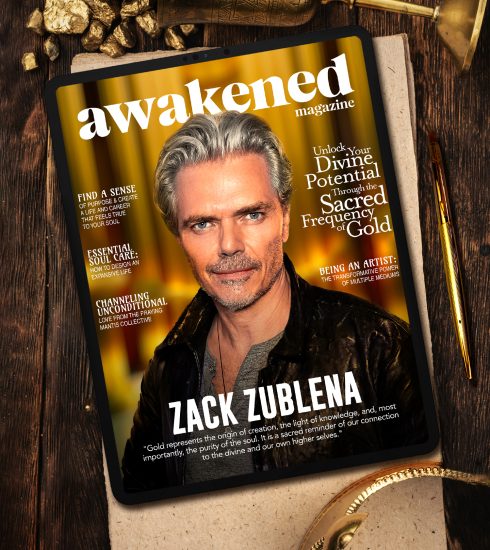
Find a Sense of Purpose & Create a Life and Career That Feels True to Your Soul – An Interview with Crystal Kulpcavage

If someone is feeling kind of stuck in their career, what encouragement would you give them at this moment in their life?
Crystal Kulpcavage: It can be so difficult to feel trapped in something, especially when we’re relying on it for a sense of security. So many of the people that I work with are the breadwinners or they feel a tremendous responsibility to their family and then they feel the pressures of not liking their career, not feeling connected or burning out. I always tell people trust the process, which sounds so cliche, but most big breakthroughs come right after a breakdown. So if we feel that we are being weighed down and at the point where we just can’t take it anymore and we can’t see a way out, hang in there, because you’re almost there.
When we feel stuck, it’s usually a sense of something deeper that’s going on. Yes, the career might need to change. Yes, the coworkers might be a problem. Maybe you’re not really where you think you’re meant to be, but it’s the feeling of being stuck that is almost an insecurity or a powerlessness or a fear that we usually need to address first, because when we’re feeling fearful, when we’re in a state of stress, we’re not as connected to our intuition. We can’t see our next step forward, and then, we start to feel like there’s no way out.
But trust the process. The breakthrough could be right around the corner, and the only way to stay stuck is to really stop moving.
Can you share your journey of awakening, whether spiritual, conscious, or mindful? Did spirituality play a role in your upbringing, and how did it evolve in your life?
Crystal Kulpcavage: I did not grow up with a strong spiritual presence, although I had the typical godmother, grandmother who would take me to church on Sundays and such. I think it was multi-layered, my awakening. I can’t pinpoint one specific time. I feel like we just keep going and evolving and evolving.
I came from a family of what I would call struggle—work really hard for little reward, great people, not always the best choices—and I became determined to do things differently. I really became focused on all the externals. I thought that the choices were the reason that I was where I was. The lack of money was the reason I was where I was. So I went out and I got a high-paying job, a stellar education. I built a white picket fence around my home. I was just doing everything that I thought was the right thing.
When I didn’t feel what I expected to feel once I achieved everything I set out to achieve, it pulled the rug out from underneath me because I couldn’t possibly understand what I did wrong. Everything looked so good on the outside, it didn’t feel right on the inside.
Then, I had a few moments that were pivotal in my awakening. When I was in my mid-20s, I lost a dear friend of mine in a car accident, and I started going through all of the soul-searching questions like, why him, why not me? I didn’t even know that could happen to me, and I started looking deeper into my life and unfortunately had the realization that if I had passed in that moment, I wasn’t proud of what I was leaving behind. I was just trying to achieve. I wasn’t actually connected to what it is that I was achieving. It didn’t mean anything to me.
Then, fast forward through my grief and my struggle, I reached out to different healers, different coaches, understanding what was going on for me, and that was a big part of my transformation. I actually came onto Reiki before I came onto coaching, and I like to joke, my Reiki master made me feel amazing in the moment, like I got off the table and everything was colorful and I felt so good and I didn’t understand it. My brain felt broken because nothing changed. How did I feel better when I didn’t change my job? I still hated it. My brain felt broken because nothing changed. How did I feel better when there were still problems in my life?
I wish that would have lasted. But slowly and surely, my old self came back, and then I started to question, well, how could I feel good for a moment and then have it go away again? And that’s when I started understanding that our thoughts impact our emotions and our emotions impact the way we make choices in our life. And all of that is what was not in alignment inside of me. It wasn’t just that I wasn’t happy in my career, and that just led me on this passionate journey of understanding what’s going on within me.
Then change after change after change was another level of awakening. It was leaving the job. It was starting the business. It was failing at the business. It was being married. It was failing at being married. It was getting divorced. It was moving away. Each layer gave me new perspectives, new insights, and new tools.
 At what point did you feel a calling to help others? How did that unfold in your life?
Crystal Kulpcavage: I’ve always been a helper. It was a family value of ours to always give. I went through grade school. I was always the tutor—high school tutor, college paid tutor. When I was in IT, I was a software engineer. For many years, I was working on the team that, if you couldn’t figure out the problem, you brought it to that team. So I think it was always innately part of me.
And once I started learning how much our thoughts and our feelings impact not only our reality but the people around us, I wanted to scream it from the rooftops. I wanted to go back to every person I loved, who I knew was suffering in their own ways, and just say, oh my gosh, I could help you, I could help you.
And then, it became my life’s work.
I look at a lot of websites for healers and coaches, but one of the things that stands out is how you describe yourself as “part compassionate healer, part professional badass, and part fun-loving wisecracker.” In the times that I have connected with you, I feel the professional badass. Talk to me about the part compassionate healer and part fun-loving wisecracker. What are those parts of you?
Crystal Kulpcavage: Well, I think you’re seeing that so much, because you’re talking about me to me. If we were talking about you and we were engaged in a conversation, that’s where I really take pride in the amount of empathy and compassion that I have for people. I mean, I honestly could say I feel like I’ve been through hell in my life, and I’ve helped other people through the hells in their lives, so I know what it feels like, and I want to meet you where you are.
It comes across. I pride myself in being a no-judgment person. The stories that I have heard in my life—so many people are like, “I don’t want to say this, I don’t want to admit this,” and I’m like, “Oh honey, you will never be the worst or the best. I don’t judge.” So there’s the compassionate healer part.
The fun-loving—I just, I love making it fun and light. Just because you’re talking about your darkness doesn’t mean it can’t be light and funny. And, you know, we all have to laugh at ourselves. I have a friend of mine who said, you know, his favorite thing about me is I constantly laugh at myself. I’m just always giggling about whether it’s something I did well or something I did really wrong.
I love bringing that to my coaching work because we need to not take ourselves so seriously. And I know in myself, as a high-achieving woman, taking things way too seriously was one of my biggest challenges. I couldn’t enjoy; I couldn’t relax.

The name of your business is A Sense of Purpose, and your logo has a peacock head. Talk to me about why you chose that name for your business and why that as your logo.
Crystal Kulpcavage: Well, first of all, I don’t believe that I chose it. I do believe it chose me. And when I’m going to make any decisions in my life, I’ve learned by now not to make them from my brain, not to think about what the best answer is, because the best answer doesn’t come from there. It comes from deeper within us. It comes from, I believe, outside of us, and we channel it in.
I prayed and I meditated. “Help me create something that is true to me, true to the work that I’m going to do, and will resonate with the women that I’m going to impact.” And I found myself, when my son was young, at the Philadelphia Zoo. And I’ve always liked peacocks, and there, at the Philly Zoo, they roam freely. So you could be standing there looking at a turtle, and here comes a peacock walking along, right? And I didn’t know that at the time. I had three different instances that day where the peacock was chasing me, cawing at me from a tree. I didn’t even know they could fly.
It was just this moment of, “There’s peacocks everywhere,” and I started thinking, like, I love the color, I love the branding that comes with the peacock. So I started sitting with the meaning behind it, because everything I do I like to have some kind of connection to. And you have the typical peacock vibe of, like, show your true colors, be authentic, strut your stuff, be proud of who you are, and that resonates on a more superficial level.
But the peacock I see is very much tied to the Phoenix, and so many times in spirituality we see the Phoenix is rising out of the ashes, overcoming hardships, and I help people do that on the inner level.
But my strength is I’m really good at tying the spiritual side to the professional side, which is very practical and very grounded. And I think we need the spirituality to be happy as human beings, but we need the practicality to exist in society today, to make the money we need to survive, for example. So to me, the peacock on a deeper level is representational of the Phoenix in a practical way.
You just mentioned that one of the strengths that you bring to the table is integrating the life, career, leadership, coach, strategist…more of the practical side. But, you also bring the more spiritual side, which is the Reiki and the spiritual coaching and counseling. How do you integrate those together?
Crystal Kulpcavage: Well, I think that’s the most valuable piece is being the bridge between those two worlds, because sometimes we’re very clear on what we believe and we’re very clear on what we have to do and we don’t know how to integrate them. I always, first of all, when I work with people, I help them understand how they got to the place they are.
One of the biggest fears that we have is that we’re going to make the same mistake. What if I leave this job and I don’t like the next one more than I don’t like the one I have now? And we have to understand what parts of us wanted the job that we’re in now. What parts of us wanted the situation we’re in. What parts of us is thriving there, because we’re more than just one being. We have all different perspectives within us.
So, I help them get to the place of understanding how to make conscious choices that are in alignment with themselves, and part of that is what’s in alignment with what you believe. So, alignment with themselves, and part of that is what’s in alignment with what you believe. So sometimes people think we’re going to talk about, like, oh, should I be a doctor or a lawyer? And it’s really.
One of my first questions is, what do you think life is about? Why are we here? Because we want to paint the bigger jigsaw puzzle, the bigger picture to understand how your piece fits into that.

What are some of the reactions that you’ve gotten?
Crystal Kulpcavage: It depends on the person. I know their personality usually. Sometimes I’ll give a little warning, like I’m going to ask questions. There’s no right or wrong answer. Just tell me what comes up.
The awakening that happens in that moment is just the fact that, like, my gosh, I’ve been on this earth for 40 years and I’ve never thought about it. And then how has that impacted your life? That you haven’t had that conversation with yourself to understand those things. But yeah, I take people back to the root of everything that they believe in and then help them connect that to the choices that are in front of them.
Has that been something that you’ve just developed intuitively through your own life’s journey, or was there some sort of training that helps you guide people in those ways?
Crystal Kulpcavage: Well, I have professional training as a coach and, you know, that comes with a lot of understanding what questions to ask, how to question people, how to listen to other reactions. I tell people I’m not just listening to your words, I’m listening to the gap between your words. I’m feeling the silence and what you don’t say. I’m understanding when what you’re saying doesn’t feel in alignment with you, when the energy’s off, when maybe that’s a story and not a truth. So there’s all of that that comes from just generally being a coach.
But my process itself comes from me really hitting my head off the wall for a lot of years and understanding, man, if I knew this sooner. And then helping my clients see that upfront so they save the time that I didn’t have the privilege of saving.
How do you integrate Reiki with this?
Crystal Kulpcavage: What I like to do now is I teach them how to connect with their own energy fields, how to feel their energy, how to understand when their energy is working for them or against them in a particular situation. That impacts their performance, that impacts their fulfillment, their ability to connect with people, impacts their performance. That impacts their fulfillment, their ability to connect with people. So I teach them a lot of the energy work that I’ve learned through the Reiki process.

When someone comes to you without a spiritual background, how do you introduce some of these concepts to them?
Crystal Kulpcavage: Most of my coaching right now, the majority of it is done one-on-one, so I’m very good at intuitively understanding where a person is, respecting where they are. I don’t present anything to them. I tell them, you know, take what resonates, throw the rest out the window.
Honestly, I have worked for people that have absolutely no spiritual belief and are convicted in that. They have conviction that there is nothing they want to believe in other than biology, and that’s okay. That is your spiritual belief. Your spiritual belief is that you don’t have one. And I work with people on that level as much as I work with people who have a devout religion that they stick to.
It’s really me questioning them and using my intuition to help them understand what they want to believe for themselves and what results that’s bringing, because every belief we have impacts our life in some way. So this is what you believe. Great. How’s that impacting you? Is that what you want for yourself? Is it worth keeping that impact, or is it worth shaking up what you believe in and maybe trying something else on for size?
What are some clues we can look for to determine if we’re stuck in our careers?
Crystal Kulpcavage: The simplest way I could describe it is stress. As a society today, we are just normalizing that we are supposed to be highly busy, highly stressed people, and our souls are not happy that way. That is not, in my belief system, what we came here to do. So that shows up as overthinking, second guessing, overworking, having no boundaries, people pleasing, snapping at our kids, going into our bedroom, shutting the door and being like that is not the mom that I wanted to be.
We think we’re controlling or having influence over the aspects of our life, but they’re really controlling us. They’re turning us into the type of woman that we do not want to be. So that, to me, is the biggest sign. And when you’re in that state of stress and your nervous system is dysregulated, you’re not as connected to your intuition, you’re not as creative, you have a harder time connecting and influencing people. Studies show that your IQ could drop by about 50% when you’re severely stressed. I mean you are literally not being yourself in that moment.
And when you start to feel like none of this is me, we blame the job, we blame the husband, we blame the house we’re living in, and it’s like something’s off and we just need to come back to center and reconcile within us the feelings that we’re having.

Can you paint a picture of the what’s possible for someone who feels stuck?
Crystal Kulpcavage: I have to tell just a little story here. Back when I was doing a lot of in-person speaking events, I used to have a little sign that said anything is possible and it was handmade, like. I printed it off the printer, I put a cupcake pencil between the two pieces of paper and glued it together and made a little sign. And my son was little and it was thundering and he looked out the window and took the sign and he’s like anything’s possible, you could be sunny and it was just like oh my gosh, he gets it. But again, as cliche as it sounds, anything is possible Like.
I have stats on my website that say my clients have received up to an 80% increase in career satisfaction and a 70% increase in quality of life. And I do that for a reason because the biggest challenge we face is we think like our life could be 10% better. What if your life could be 80% better? Like what would that even look like? Most of us can’t even get there in our brains to understand what could change to the point that I could have that type of result.
I have seen so many things I’m still in awe of. I’m still in awe when I get a call from a client who’s like you’re not going to believe it, but I believe it because I’ve seen it over times over. I’ve had clients who have tripled their salaries not increased their salary tripled their salary. I have had people who were terrified to quit a job because they didn’t think they could live without it and they got suddenly fired. Suddenly fired with a generous severance, and they called me laughing like well, guess it was taken care of. Here we go, I’m ready.
People who have left toxic situations, people who had issues with family members, for example, who they would literally shake when they were in the presence of them. They were taking medication to stop the shaking and then, through our work together, they went on a two-week vacation without their medication, with their mother, who no longer makes them shake. Like real things that we tell ourselves we just have to accept. We don’t have to accept, we just have to be willing to meet the parts of ourselves that are really connected and attached to the situation we’re living in and understand what they need.
You just said we need to meet the parts of ourselves that are attached to the situation that we’re living in. What do you mean by that?
Crystal Kulpcavage: It’s really easy to look into the mirror and see one person. But I want you to imagine that you’re made up of an infinite amount of people. All you, Say pretend for me that every age of you exists within you. You could be in a career, for example, that you hate, and every day you’re like here we go again. I don’t like this, why am I still here? There might be a couple fo parts of you, a couple ages of you, that really feel comfortable and safe in that career and they don’t want to change.
There could be parts of you that can’t wait to get out of there and there could be parts of you that are in between the two and there could actually be parts of you that like it. Because I’m sure, even when we hate our job, there’s like five minutes in our day where we go oh, that was really good, I impressed myself, I feel really good.
Then, we create this inner conflict and it’s like I don’t know if I go or I don’t go, this or that. We have to meet the parts of ourselves to understand what do the parts need that are comfortable in this place? What do the parts need that are scared. What do the parts need that actually like it and are getting something from it, and how can we give them what they need so that you could get an alignment, so that you have a truth that feels good to all parts of you, so that you can move forward more freely?

Give me an example of a truth that someone would be able to hold on to that would bring them into alignment. Help me see how that’s possible.
Crystal Kulpcavage: I’m going to give you an example from my life right before this call. Okay, Cause they’re subtle.
I’m about to get on this call with you. I’ve done these things a hundred times. I get nervous. I checked in with myself, with my intuition, and I said what part of me is not in alignment with doing this right now? because I’m skilled at doing this, I get very specific. I’ll say my 9 year old is unhappy. You don’t have to be that detailed, but there’s part of me that’s unhappy. Why? Because there was a person in my life who had a low tolerance for talking, who I grew up around and would regularly tell me I talk too much. So now I’m about to be on a call where I’m being asked to talk and I started to have nervous flutters that I was going to talk too little or too much or not enough. And it’s knowing that about myself. Within two seconds I was like I see you, honey, and I told her what she needed to hear. Now, this is a very minor example, but then I was completely comfortable getting on the call.
We have beliefs that were placed within us from our past that we don’t even realize are still affecting us, but they are shaping us. In a career we could believe that we can’t live without the money. We could believe that we were a failure if we have a lower salary. If our salary goes down 20%, then we made a mistake. We could have a fear that the person that we’re with will leave us. If we’re unemployed for a short amount of time. All types of beliefs can come in.
How do you help people come to those beliefs?
Crystal Kulpcavage: It’s a combination of asking questions that will reveal the answer. It’s a combination of centering them in a particular way that they are open to the answers they receive. So it’s not just get on the phone and ask a question, because if it was that easy, we would have answered the question already. So we go through centering exercises, we balance and cleanse our energy first. we go deep within,
but then I really pride myself in developing my intuition. So if there’s something that I feel needs to come up that’s not being said, I pose it as a question and I say does this feel true? Does this resonate? I’m feeling this is coming up right now. And then usually a light bulb goes off that goes oh, I didn’t connect the dots. I didn’t connect the dots.
So somebody might be having a work problem and I might hear something about their home life or feel something that happened in the past and say was there ever somebody in your life that acted this way or cared about this? Oh yeah, that was my dad or my caregiver or my mom. And then I’ll say can you see how that’s impacting the situation? And usually that’s when you know, the walls come down and then they start to come home to that part of themselves and develop a connection with that part of themselves.

I think one of the most motivating factors for me as a parent is…how is this impacting my kids? How does your work help parents no matter how old their children might be?
Crystal Kulpcavage: So many times we don’t want to make changes for ourselves. We think we do, but it’s not until kids come along. And then we’re like, I want to do it for my kids. I want to be a better mom. And then we have this motivation. But then we, like myself included and my clients, they start learning all these things, of how their past shaped them, and they’re like, oh my gosh, I’m messing up my kids so badly right now.
One thing I say is, you know, trust your kids’ path. They have a path. They came here for a reason. But the other part of it is, and I’ll say jokingly, I do have a friend who has a therapy fund for her child. She’s just like, I’m just putting money away now because I know I’m not doing it right and I’m going to encourage growth when they get older. So there’s that option.
But there really is so much that a child takes in, and we’re not supposed to raise the perfect child, and we weren’t supposed to be raised perfectly, because we are all made of darkness and light, and we don’t want to rob ourselves of that. We don’t want to rob our children of that. It’s that duality that we can hold the superpower and the super weakness that makes us human and valuable. But we do want to have kind of boundaries around our superpower so it doesn’t become our super weakness.
And at least when I was a kid, there were a lot of working moms and working dads, and there was a lot of, you know, do all your homework before you go out and play, and you just come home exhausted from school and it’s, get right to the homework. And we think we’re raising our kids great that way because we’re teaching them discipline and structure. And kids aren’t disciplined and structured.
But studies have also shown that we as human beings are highly productive for 60 to 90 minutes and then we need a 20-minute break. So we’re sending kids to school all day without these 20-minute breaks. We’re taking them home, we’re saying, do your homework. Or we’re not present to say, are you relaxing, or are you jumping onto a screen? So all of those things, they’re all areas that can be improved.
But we’re not trying to raise the perfect child or have the perfect experience ourselves. We want to kind of laugh at ourselves when we’re like, oh, did it again. And here I am in my weakness because I just love that power so much.

If someone is feeling out of alignment with their job, how can you help them find something that’s true to their soul?
Crystal Kulpcavage: I think that’s going back to the whole process of starting at the beginning. Who are you? What do you believe in spiritually? What kind of person do you want to be in this world and what are your unique traits? What are your superpowers? What are your super weaknesses? What are your values? What do you need? We all have needs as a human being.
I work with high-achieving women. They don’t even know they have needs. They’ve been trained out of needing things, right. So what are those things? And then, when you start to put together your own kind of matrix of all these different aspects of you, it’s pretty obvious what it is that you want for yourself.
Every person comes to me and says, I don’t know what I want. Every person has always known what they wanted. They may have been afraid to know the answer. They may have been afraid to see it clearly. They may have thought, if I know the answer, then I have to act on the answer or I’ll be frustrated with myself for not pursuing it, and it’s scary to pursue it.
So part of it is really getting clear on some of the key questions of who you are as a person and what you want, but the other part of it is really trusting that you know. You just have to work on the parts of you that don’t want you to know the answer, because you’re really going to grow when you know the answer.
You have quite a few, “I believe” statements in your bio that I want to read through and get your quick elaboration on them.
The first one says, “I believe whatever conflict exists within you is there for a reason.”
Crystal Kulpcavage: Again, going back to that, there are many pieces and parts within us and some of us want one thing and some of us want another, and it is in the meeting of yourself and the gaining trust with yourself that you can reconcile that conflict, because one is love-based and one is fear-based. And when you identify that, you overcome the fear.
“I believe your greatest pain is your greatest asset.”
Crystal Kulpcavage: Our suffering is so important. We all try to avoid suffering. Our suffering is creating and shaping us and teaching us ways to see the world and to act in the world, and that becomes our superpower.
“I believe there is magnificent intelligence within you that is awakening you to your truth.”
Crystal Kulpcavage: We all have intuition. We all have the ability to, in my belief system, tap into something bigger than us, and it’s always trying to get our attention. It’s just our fears and our insecurities that drown it out.
“I believe you are closer to what you desire than you realize.”
Crystal Kulpcavage: Our brains have a way of wanting us to stay comfortable, so they will convince us that it’s too much, too hard, too big, too long, and it’s really just right around the corner.
“I believe anything is possible for you in any moment, at any time.”
Crystal Kulpcavage: I’ve seen too many things in my clients’ lives and my own life to think otherwise. Things can change in a moment we can have quantum leaps.
That is a powerful statement. “I believe anything is possible for you in any moment, at any time.”
I have seen that so many times in my life where I feel stuck and then boom, something changes and I’m like…how is this even possible? And then the next time I’m stuck, I forget that it happened last time. I just forget every time. I think I need that tattoo somewhere, “I believe anything is possible for you in any moment, at any time.” Do you have any tattoos?
Crystal Kulpcavage: I do. I have a butterfly tattoo on my upper back and that was my symbol of I used to always love the Aerosmith song how? The lyric “how high can you fly with broken wings?” And that was a tribute to my victimhood. And then realizing that my wings were never broken and I have the tattoo on my back as my reminder that it’s behind me and moving me forward.

I thought you were going to tell me like I have an entire peacock covering my entire back. That’d be awesome.
Okay, so you referenced this earlier in our conversation, but your website says, “Crystal has helped her clients improve their quality of life by up to 70% and their career satisfaction by up to 80%.”
I rarely see these types of statistics on people’s websites. Number one, how do you know that? And then, why is it important that you would actually share this information?
Crystal Kulpcavage: Now you’re meeting the software engineer within me, who looks for hardcore facts. But the truth is the brain is usually the one that’s the decision maker, so we have to speak to the brain as well as speak to the heart, and it is an actual statistic.
So what I do is I have certain questions and exercises that I ask my clients at the beginning of our work and throughout certain checkpoints while we’re working together, and then at the end, and then I look at the difference in the percentages and then I track them over time, and that’s not only to show my clients how much they have grown, but I ask them to rate the satisfaction in multiple areas of their life and their career and their spirituality. And then I also use that for me to know when I’m on point and where I could be improving.
So if I’m seeing a fluctuation at certain points, that something’s going down, I have to check in with myself and say am I missing part of the process? Am I feeling off? Is there something coming up that I need to address? So it helps me show them their growth, it helps me show people what’s possible, and then it helps me keep in alignment as well.
What is the best way for people to follow and connect with you if they want to reach out? I know you’ve got a consultation call they could make with you to potentially connect. Talk to us about this.
Crystal Kulpcavage: So I personally believe, before working with somebody, that we should have a conversation to understand what your needs are, what your challenges are and if I’m the right person. It’s not going to be fun for me or you if I’m not the right person. So, I always offer a no-cost consultation. So if anybody’s listening and is looking for the type of support that I provide, that’s the best way to start. You could schedule a 30-minute call with me on my website at www.seekingasenseofpurpose.com. You talk to me directly.
I will help you in whatever way I can and then, if I feel like I’m a good fit to support you, I would paint the picture of what that looks like and help you decide if it’s the right move for you, because chances are parts of you are going to be a yes and parts of you are going to be a no, and we need to come to a meeting in the middle and understanding what’s best.
So on my website, you can sign up for the consultation. If you just want more tips and tricks, I have a mailing list. You can sign up for my mailing list. I send out articles, inspiring messages and special offers. That’s also available on my website, and you can find links to LinkedIn, Facebook, and Instagram to follow me on social media as well.
Crystal, it is so good to connect with you and feel your heart, your passion, your commitment to your clients, to yourself, to this world. I thank you so much for sharing everything today. Really appreciate it.
Crystal Kulpcavage: And I return that back to you. Thank you for the genuine questions and the fun interview.