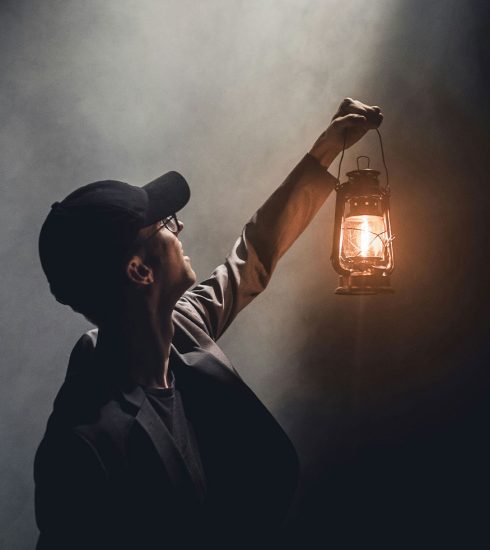
Off the Rollercoaster of Pain and Into the Light – An Interview with Ragan Thomson
How does a champion‑in‑the‑making trade the relentless pursuit of trophies for a life devoted to healing, self‑sovereignty, and the light within?
For Ragan Thomson, leaving competitive tennis at eighteen—after years of perfectionism, disordered eating, and Catholic expectations—became the pivotal act of reclaiming her true identity. Guided by the transformative power of nature, a powerful spiritual mentor, and the courage to ask whether she would choose light or remain in fear, she evolved into a meditation teacher, inner‑child healer, and soul‑activation guide who now helps others step off the treadmill of external validation.
In this conversation, you’ll discover how Ragan transmuted high‑achievement pressure into deep self‑love, why ancestral patterns and subconscious rewiring sit at the heart of her work, and how her “choose the light” practice can reorient any moment of doubt. Continue reading or listening by subscribing for free on Spotify, Apple Podcasts, Amazon Music, or YouTube to discover how Ragan Thomson’s insights can inspire your spiritual path.

One of the things I learned about you from your contribution to Awakened Hearts is that you grew up in a high-achievement-oriented family, which greatly shaped your identity. Could you share what that experience was like for you?
Ragan Thomson: I grew up in the Midwest in a loving family that was very success-oriented. On the surface, it seemed motivating and inspiring, and initially, it resonated with aspects of my personality that needed addressing in this lifetime. However, rather than feeling unconditional support, I began to internalize expectations that felt more demanding than nurturing. As the youngest of three girls, significantly younger than my sisters, I often felt unnoticed and thought achieving success would help me gain attention and love. This dynamic became quite painful, as I felt I needed to excel just to be seen.
I can relate to that. My experience centered around academic achievement—if I got an A-minus, my dad questioned why it wasn’t an A. Did you find that kind of pressure motivating or defeating?
Ragan Thomson: Honestly, it felt defeating. It made me constantly strive for external validation. I channeled this need for achievement into sports, specifically tennis. My dad aspired to be a professional tennis player but was prevented by an injury, and I felt he lived vicariously through me. Seeing his joy when I succeeded initially inspired me. Tennis came naturally—I was talented, fast, agile, and successful at tournaments. Early success brought attention from family, extended family, and even local media. However, this became a heavy burden over time, becoming a perfectionist obsession rather than joy. I lost myself in relentless practice, trying to meet this impossible standard.
You mention reaching a breaking point with tennis at age 18. Could you describe what led to this?
Ragan Thomson: By around 15 or 16, I developed an eating disorder, a combination of anorexia, bulimia, and over-exercising, directly related to my competitive environment. By 17, my anorexia was severe—I was essentially a skeleton, yet remarkably still winning tennis matches. Realizing that continuing down this path could lead to my death, I knew I had to stop competing. The obsession with winning had equated to love, affection, and maintaining a relationship with my dad, and stepping away from that was incredibly difficult but necessary for my survival.

In your writing, you shared that you grew up in an Irish Catholic environment but eventually explored other spiritual paths. What sparked that shift for you?
Ragan Thomson: I was raised as a devout Catholic and attended church multiple times a week. While I appreciated the foundation and connection to God, the teachings eventually felt misaligned for me. Around the same time I stopped playing competitive tennis, I was supposed to get confirmed in the Catholic Church. Instead, I surprised everyone by choosing not to. Deciding against confirmation was part of my broader decision to step away from tennis and explore spirituality independently. I completely closed those chapters of my life simultaneously, although I briefly taught tennis during the summers later, which was enjoyable. That marked the start of my personal spiritual exploration, distinct from my upbringing.
What were some of your initial explorations into spirituality? Were there specific books, classes, or teachers that guided your early journey?
Ragan Thomson: Initially, after stepping away from tennis, I went through a profound identity crisis. I didn’t know who I was outside of being an athlete. It was a tough internal journey. However, even during those challenging times, I always found comfort in self-help books. Deepak Chopra was one of my early influences. I loved spending time in the bookstore’s self-help section, absorbing everything I could.
My first major breakthrough came in my mid-20s when I met my first spiritual teacher. Around the same time, I became deeply involved in theater, which served as a profound spiritual and emotional outlet for me. I landed in a spiritually-oriented theater group in Los Angeles, where acting became an extraordinary tool for healing. On stage, I could authentically express the anger, sadness, grief, and depression I’d been carrying for so long.
Through theater, I began to explore and awaken the more artistic and feminine parts of myself—singing, painting, jewelry making, and creative expression. It opened a door within me that had long been closed.
However, meeting my spiritual teacher was truly the turning point. She had an angelic presence and a clarity that resonated deeply with me. When I saw the peace and wisdom in her eyes, I thought, “That’s what I want to feel.” My interactions with her helped me realize I deeply desired to step off the emotional rollercoaster of pain I’d been living on.
Within Awakened Hearts, your chapter is titled Off the Rollercoaster of Pain and Into the Light. Can you share more about meditation and nature’s role in your journey of healing and awakening?
 Ragan Thomson: Nature has always been my sanctuary. Growing up in Missouri, surrounded by expansive, rustic land, I spent countless hours outdoors—catching frogs, building forts, and exploring. Nature felt like my most faithful friend and confidant, offering constant support and connection.
Later, during my university years in Boulder, Colorado, nature once again became my saving grace amidst my identity crisis. Each morning, before class, I hiked or skied in the mountains. In those moments, I prayed for help and consistently experienced profound divine love and spiritual connection. Nature truly saved my life at that time, grounding and centering me in ways nothing else could.
Meditation entered my life more formally through my spiritual teacher. Working closely with her awakened my innate healing abilities, which I realized were deeply connected to meditation. As I explored this further, I discovered that meditation allowed me to become a clear channel for spirit and healing energy. I found joy not only in silent meditation but also in guiding others into deep meditative states, helping them uncover the spaces within themselves that needed healing and balance.
One of the pivotal questions you write about is, “Do you choose the light or the dark?” When did this question become significant to you, and how does it impact your life today?
Ragan Thomson: This question became central during my deepest moments of struggle and self-doubt. After tennis and throughout my identity crisis, I frequently encountered what felt like a spiritual crossroad—one hand offering darkness, symbolizing fear, worry, temptation, and doubt, and the other offering light, representing love, truth, and faith.
I deliberately explored the darkness at times, thinking it held answers or some deeper understanding. Still, ultimately, it led to more pain and confusion. Choosing the light required courage, especially during what felt like repeated dark nights of the soul. Each time I chose the light, even amidst intense pain, I reaffirmed my commitment to love, truth, and the innate goodness of life.
Over time, this choice became easier and transformed into a practice. I began to understand that, no matter how dark things seemed, the core reality is always light. This realization now consistently guides me, helping me stay connected to my true self and to the loving presence that exists within every moment.

When I initially read the question about light and dark, I interpreted it as good or bad. But as you explained further, I realized you defined darkness as fear, worry, doubt, and other challenging emotions. Do you still regularly ask that question, or was it more relevant during a specific period of your life?
Ragan Thomson: When I talk about darkness, it’s essentially the absence of light rather than a negative or bad thing. Initially, people might think of darkness as scary or negative, but really, it’s a lack of truth, ignorance, illusory fears—things that feel real but actually aren’t. On the other hand, light is truth, presence, and the acknowledgment that, despite what you’re processing, it’s not who you truly are. It’s unresolved energy, beliefs, or fears still present within you. It’s not wrong or bad; it’s simply part of you until it’s resolved.
That resonates deeply. I often notice that emotions like fear, anxiety, or worry arise from judgments or stories I tell myself about people, situations, or potential outcomes. It seems that stepping into the light means releasing judgment and adopting a new perspective.
Ragan Thomson: Exactly. Our preconceived judgments or beliefs often create these challenging experiences. If we find ourselves triggered by something external, it’s usually a sign that there’s internal work to be done. Owning it immediately—acknowledging, “This is activating something in me,”—can shift us back into the light. The external situation merely reflects something unresolved within us. Often, we mistakenly project these feelings onto others when, in reality, they’re simply stored emotions resurfacing to be resolved.
When people seek your guidance, whether in workshops, group sessions, or one-on-one coaching, what common challenges do they present? What tends to draw them to your work?
Ragan Thomson: Stress is prevalent; many people today are deeply stressed and hold significant unresolved fear, often more than they realize. Fear manifests in various forms—fear of failure, unworthiness, disconnection, not knowing oneself—and often they’re very hard on themselves about it. Many individuals lack a genuinely loving relationship with themselves. They might seek external validation and love, not realizing that what they’re looking for resides within.
A substantial part of my work involves helping people realize they’ve been approaching things backward. It’s an inside job. True self-love, self-compassion, and self-sovereignty are foundational, not end goals. As people cultivate these qualities, they begin dissolving internal non-integrated energies and parts. Their personality aligns more with their soul, allowing their authentic self to emerge. Suddenly, they genuinely enjoy relating to and serving others because they’re no longer wrapped up in their unresolved stories and stresses.
My specialty areas are inner child work, soul activation—helping people deeply connect with their souls and clear away layers of unresolved emotions—and subconscious rewiring. This process leads to true self-love and sovereignty, a clear understanding of their energetic system, and freedom from external expectations. As they shift from constant doing to simply being, life aligns effortlessly. Healthy relationships form, work becomes more creative and fulfilling, and there’s a flow state that naturally emerges.
Ultimately, people come to me seeking a deep connection with their true divine self, ready to step off the exhausting treadmill of external validation and discover fulfillment from within.
You mentioned earlier that you’re a parent, and I relate to navigating spirituality and consciousness with my own kids, now in their twenties. Many people in the spiritual community, especially leaders and healers, grapple with raising their children differently from how they were raised. How do you personally navigate spirituality and consciousness with your own children?
Ragan Thomson: Growing up, spirituality felt somewhat imposed upon me, though not negatively. It was simply an identity structure—”this is what Irish Catholics do.” While I appreciate the foundation it gave me, I now aim to create space for my kids to form their own relationship with the divine, however they understand it.
My children are 11 (my youngest son), 15-year-old twins, and 16 (my oldest). Initially, we attended various spiritual centers and occasionally Catholic masses during holidays. I’ve maintained openness toward all religions, speaking and sharing non-denominational messages about connecting to light in diverse spiritual settings. However, I’ve learned to release expectations of my kids sharing my specific spiritual experiences. My role is to nurture their ability to connect spiritually in whatever resonates deeply with them.

I was raised in a conservative evangelical household and was a pastor myself, so I understand the deep-seated identity in such religious environments. One significant shift I’ve experienced is letting go of the need to “save” anyone, including my children.
Ragan Thomson: Congratulations—that’s a crucial realization. I’ve done substantial work around releasing that rescuer mentality. The “victim-perpetrator-rescuer” dynamic often traps us until we transcend our ego. Recognizing and moving beyond that has allowed me to become a channel for the light, rather than someone trying to “save” others.
Ultimately, unconditional love is the most powerful spiritual guidance we can provide our children. By genuinely loving them, accepting their unique journeys, and offering steadfast support through all life’s experiences, we create an environment conducive to their authentic spiritual awakening.
On a practical note, tell us about some of the ways people can engage with your work, starting with the Insight Timer app.
Ragan Thomson: Insight Timer is a fantastic meditation app that connects facilitators with over half a million daily users. I offer both free and premium guided meditations there, and frequently host live sessions. All content on Insight Timer is carefully curated to ensure high quality and profound spiritual impact.
Your website, raganthompson.com, is another extensive resource. What can visitors expect there?
Ragan Thomson: My website offers various free resources, including monthly wisdom teachings, full moon meditations, blogs, podcasts, and detailed information about upcoming events and global initiatives. Visitors can sign up for my newsletter to regularly receive updates and exclusive content. I’m also working on launching a comprehensive online spiritual university to deepen people’s self-awareness and connection to their divine selves.
Additionally, you host Rapid Healing with Mantra and Meditation at Unity Church in Santa Barbara. Can you share more about this?
Ragan Thomson: Yes, it’s a monthly class that combines purifying meditations, soul activation techniques, and ancient Sanskrit mantras. Participants often experience profound and rapid emotional healing, leaving each session feeling lighter and clearer.
Your chapter in Awakened Hearts is an inspiring contribution. What was the experience of writing it like for you?
Ragan Thomson: Writing my chapter felt timely and deeply meaningful. It allowed me to revisit my personal story of awakening from a healed and detached perspective. Sharing authentically and vulnerably is part of my ongoing journey to inspire hope and provide tangible guidance to others on their own paths toward awakening.
Ragan, thank you so much for sharing your story and wisdom. It’s incredibly empowering for those navigating similar journeys.
Ragan Thomson: You’re so welcome. Our conversation truly resonated with me—it’s wonderful to connect and share this journey of awakening with you and your audience. Thank you so much.