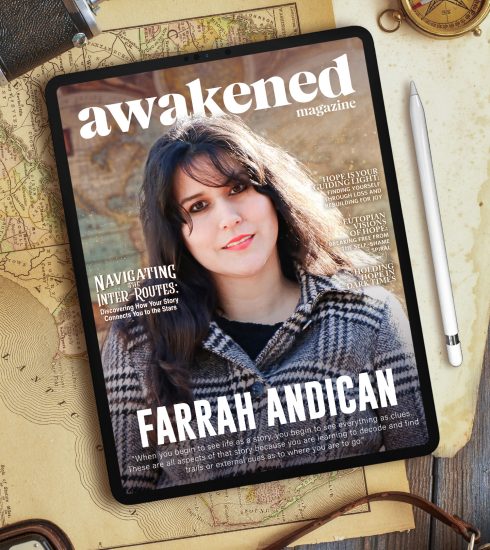
Put Your Writer Pants On: A Journey Through Self-Doubt, Reinvention, and the Power of Publishing – An Interview with Sierra Melcher
What if the story you’ve been afraid to tell is the exact one the world needs to hear?
Most of us have felt it…that quiet pull toward something we want to create but keep putting off. The book we’ve been meaning to write. The message we’ve been sitting on. The version of ourselves we haven’t quite stepped into yet.
In this conversation, Sierra Melcher speaks candidly about growing up dyslexic, giving up on her dream, and then finding her way back to the page…and eventually to founding Red Thread Publishing. But beneath the publishing expertise is a deeply personal story about identity, courage, and what happens when you finally stop talking yourself out of your own potential.
Whether you’ve always dreamed of writing a book or simply feel like you have something worth saying, this conversation will challenge you to stop waiting…and start becoming.
Continue reading or listen in by subscribing for free on Spotify, Apple Podcasts, Amazon Music, or YouTube.

Were you a kid who always had a pencil and paper, or did your love for writing develop later?
Sierra Melcher: Actually, my story is a little different from what most people assume. I’m dyslexic, so learning how to read was incredibly difficult for me. It was a real battle. Working with books, with teachers, with my parents—everything about it felt challenging. Through most of my teenage years, the idea that I could ever be a writer wasn’t even in the realm of possibility, because I couldn’t even imagine myself as a reader.
It took time to figure out how to learn and how to read in a way that worked for me. Along the way, I had to prove myself wrong many times. Eventually, I realized that I actually could be a writer too.
At what point did you start to feel like you had reading figured out—that you were ready to move forward?
Sierra Melcher: By the beginning of high school, I had more or less figured out how hard I needed to work, and I was willing to do that work. I also think those early struggles are part of why I’ve been successful later. When something doesn’t come easily, you learn how to fight for it—how to work with it and push through it.
That experience helped me personally and also helped me help other people. When someone says, “This is easy for me, so it should be easy for you too,” it can make others feel like something is wrong with them. For me, the struggle became my superpower. If I can do it, you can do it too.
At what point did writing become something you wanted to do—not just something you had to do?
Sierra Melcher: There was definitely a gap between wanting to write and believing I could write. I wanted to write when I was in high school. I still have these notebooks filled with total blather. I thought I was going to be a poet—and it was terrible.
But I didn’t actually believe I could do it until my twenties. Then I gave up on myself for about a decade before finally coming back to the idea. When I returned to it, I allowed myself to do it really badly for a long time—which I actually think is important. You should fail at something for a long time before getting better.
I didn’t publish my first book until I was in my forties. I had tried a couple of times before and failed, and at one point, I even let the dream go. Then I decided: I was going to publish a book before my daughter turned five. That gave me three months from the day I made the decision.
Had you already written the book at that point?
Sierra Melcher: No, not at that moment.

So what was that first book, and what was it about?
Sierra Melcher: That was the first question I asked myself. If I needed to do this quickly, what did I already know well enough to write about?
 The book is called How Change Really Happens. It’s a small book, but a powerful little beast. At the time, I was working with people who were going through personal transformation. One of the things I kept seeing was that our stories about how change happens don’t actually match how change really works.
We think change should be smooth. You hire a coach and expect to become wonderful suddenly. You go to the gym and expect to be fit right away. You start therapy and expect to be healed. But anyone who’s actually done those things knows the truth: it often gets worse before it gets better. It’s uncomfortable. It hurts. It can even feel like things are falling apart before real progress begins.
So the book explores that process. I pull a lot from nature and from simple lessons and stories. Each chapter is short and easy to read. It was a really fun book to write—and I used it as my training ground for learning both writing and publishing.
Did you actually finish it in three months?
Sierra Melcher: I did.
Did you have support with the publishing process, or did you figure out self-publishing yourself?
Sierra Melcher: I was completely self-taught. I used KDP at first and later learned to work with Ingram, another distribution platform.
You were already working in the space of helping people. I’m curious about your path into that work. What motivated you to help others, and how did that journey unfold?
Sierra Melcher: I think I’ve always helped people because I struggled myself.
I went to college, earned a master’s degree in education, and became a classroom teacher. I taught high school for 15 years. I lived and taught in Vermont, California, Shanghai, China, and several other places. Teaching is actually what first brought me to Colombia, where I’ve now lived for 16 years.
For the first five years here, I taught in a high school setting. And teaching, of course, involves a lot of helping—helping students learn, helping them struggle through challenges, and supporting them with a lot of love.
Eventually, I took a sabbatical… and I’ve been on that sabbatical for about 11 wonderful years now. I stepped away from teaching, opened the first bilingual yoga studio in Medellín, and began coaching and mentoring women.
Part of that shift happened because I was looking for a space where I could feel supported, and I couldn’t find one. So I created one.
That work—those conversations with women, both one-on-one and in groups—is really the foundation of what later became my books. I wrote and published two books, and people started leaning in, listening, and asking, “How can I do this too?”
And that’s what eventually led me into the publishing world.
Did you speak Spanish before you moved to Colombia?
Sierra Melcher: No.
You moved to Colombia to teach high school. What were you teaching there?
Sierra Melcher: I was teaching social studies—U.S. history, world history, and eventually AP Economics and Politics. But those subjects involve a lot of reading and writing, and all of my students were non-native English speakers. So there was quite a bit of language teaching involved as well.
I was teaching in English to Colombian students. They had already learned English, but it wasn’t their native language. So in many ways, I was teaching language while teaching history.

Out of all the places you could have gone, why Colombia?
Sierra Melcher: There was a job available at a school, and that’s how the opportunity came up. But there was also a personal side to the story. I had actually been visiting Colombia—specifically the town where I eventually got the job—for several years before moving there, because of love.
So when people ask why I moved to Colombia, I always say, “I came for love, and I stayed for the fruit.” The love didn’t last, but the fruit did.
You have a child, so that could be the fruit of love, too.
Sierra Melcher: It’s the fruit of a different love, not the original one. But yes, it’s the fruit of a love story once upon a time.
My daughter was born here and grew up here. We’re living a permanently transplanted life, which is actually pretty cool. Her Spanish is amazing.
I imagine she’s basically a native speaker.
Sierra Melcher: Yes—and she’s bilingual. I love telling people that when she was five, she called me “insolent.” So her English is also spectacular.
After teaching, you opened a yoga studio and began coaching people. What did that transition look like, and were you developing an online presence at the same time?
Sierra Melcher: Not really. At that point, I didn’t know anything about running a business. I was learning everything on the fly.
What I did know how to do was teach. So I applied my teaching skills to the yoga and mentoring spaces. Anyone who has done a yoga teacher training probably knows that after spending thousands of dollars and completing hundreds of hours of certification, you’re still not necessarily prepared to actually teach yoga.
As a teacher, I know how to help people learn how to teach. So I saw this group of people who were certified to do something but not yet qualified to do it.
At the same time, I was running a bilingual yoga studio where many instructors couldn’t communicate with their own participants. So I designed two programs to solve that.
One was a yoga internship where I essentially threw people into teaching, while supporting them along the way. The best way to learn how to teach is to teach.
The second was a Spanish immersion program specifically for yoga teachers. In a typical Spanish class, you might learn how to order coffee, ask for a beer, or find the bathroom. But you’re never going to learn how to say “elbow,” guide someone through a meditation, or lead a visualization in another language.
So I created a program where teachers could learn the language they actually needed to teach yoga. Those two programs were really fun to build and run.

You were writing and publishing your own books at the same time. What led to the creation of Red Thread Publishing and to helping other people share their stories?
Sierra Melcher: Mentoring is amazing, but I started noticing a gap between theory and practice. Writing and publishing, for me—and now for many other people—helps close that gap.
It bridges the space between what I might understand intellectually and what I can actually implement. It connects what I feel with what I can express. And the final piece is the identity shift that happens along the way.
When someone becomes a writer—and especially when they become a published author—they are not the same person who started the process.
I hear people say all the time, “I want to be a writer, but I’m not yet.” I like to call it putting on your “writer pants.” You just have to put them on, even if they don’t fit at first. Over time, you grow into them.
Eventually, you are an author—whether or not you feel like one yet. I’m indisputably an author. I wrote those books. They have my name on them. My photo is on the back cover.
There’s a real transformation that happens for the person going through that process. And it’s visible in practical ways too. Suddenly, your email signature says, “Author of…” That’s a lot easier to communicate than something like “transformed human,” which doesn’t quite carry the same weight on LinkedIn.
The authority, credibility, and identity shift that come from writing and publishing a book are powerful. During the writing process, we do all the heart work and soul work—that’s the mentoring piece. But in the end, we also have something tangible.
And we live in a tangible world. If you can’t point to something—a PhD, a mountain you climbed, something you created—it can be harder for people to recognize the impact. A book becomes that tangible expression.
What I love most is walking people through that transformation. And at the end of it, we have these incredible tools—books—that anyone can pick up. Someone can open the pages and explore a piece of my brain, my experience, my heart, my soul, and take something meaningful from it.
That’s my favorite part.
What led you to formalize that work and create your own company to help people through the publishing process?
Sierra Melcher: During the two years when I was learning about publishing myself, people were watching. They kept asking questions. More and more people were saying, “I want to write a book—can you help me?” or “I want to publish—can you help me?”
For me, it was a big leap to say, “Okay, I’m going to do this thing that feels impossibly big and that I don’t fully know how to do yet.” But it also wasn’t my first leap.
I had already moved to China without speaking Mandarin. I had moved to Colombia without speaking Spanish. I had opened a yoga studio without knowing anything about running a business.
I knew yoga, but I didn’t know business. And every time, it required a leap of faith.
Starting the publishing company was the same kind of leap. It easily could have not worked out—but it did.
Let’s dive into the publishing world for a moment. A lot of people feel confused about it. They think, “I’m not a writer,” or “I don’t know how to publish a book—I just need a book deal.” What are the different paths available today?
Sierra Melcher: That’s a really common question because people are still trying to figure it out.
I like to think of publishing as a spectrum that ranges from self-publishing all the way to traditional publishing—the classic book deal people imagine, where you become famous, never have to work again, and life becomes easy and wonderful. That version, by the way, is mostly a hallucination.
Self-publishing itself is a wide space. At one end, the author does absolutely everything: the writing, editing, formatting, cover design, research, setup, marketing—everything that goes into creating and launching a book. At the other end of that spectrum, there are hybrid or independent publishing companies that help guide authors through the process.
Then, on the far side of the spectrum, you have traditional publishing. That path usually requires an agent and a full book proposal—often around 80 pages—that essentially explains why your book is a business worth investing in.
Because that’s really what it is. Publishing houses are businesses. They need to make their money back through the royalties your book will generate. So you have to prove that your book can succeed. I sometimes think of it as Shark Tank for authors.
In reality, the publishing world exists somewhere along that entire spectrum—from doing every single piece yourself to selling your manuscript to a company that will produce and distribute the book. They hope to profit from it, and maybe you will too.

You have a vision of helping 10,000 women become published authors. Why is that number important to you? Where did that vision come from?
Sierra Melcher: When we first started, Red Thread Publishing was an all-female publishing company. Women were the priority at the time.
For a long time, it felt like most of the books in the world were written by men, and women’s voices weren’t represented in equal measure. I do think that’s already changing, but I felt strongly about that imbalance.
Our logo is a drop and a ripple. If there’s no drop, there’s no ripple. Without that initial drop, there’s no impact. We can’t reach the people who need us, and we can’t serve the people we’re here for unless there’s a vehicle for connection.
For me, the written word is one of the most powerful vehicles we have. I don’t care how much technology changes or how much people talk about AI taking over. Books have been powerful tools for connection, knowledge sharing, and transformation for centuries.
Even with declining literacy rates and changing media habits, the book hasn’t lost its power. It might evolve, but it’s still incredibly potent.
Books allow voices that have historically been left out of the conversation to finally be heard. We need those voices right now—voices that were intentionally or unintentionally silenced—to help shift the conversation and change the cultural landscape.
Ten thousand sounds like a big number, but I arrived at it funnily. I was watching people in business talk about reaching ten million customers or building massive empires, and I realized that’s not what I want.
I don’t want to run a book machine. I don’t need to produce every book that ever exists.
What I want is to support enough people to create a meaningful impact. And honestly, it doesn’t take as many people as we think. Even five books—if they’re powerful enough—can make a huge difference.
That was the thinking from the beginning.
As you connect with women who want to become authors, what are some of the most common blocks you see?
Sierra Melcher: So many.
Many of us listening probably resonate with at least one of those blocks. Can you walk us through what they look like?
Sierra Melcher: Most of the blocks in the modern age are internal—and honestly, I’m thrilled about that, because internal blocks are something we can actually work on.
There are fewer systemic barriers to publishing today than ever before. The opportunities exist. But the real obstacles often come from our own beliefs.
People tell themselves, “I’m not a writer. I don’t have anything worth saying. I’m not ready yet. I just need another degree, another certification, another training.” Or they wonder, “Who am I to share anything? What difference would it make?”
We talk ourselves out of our own potency all the time. I did that for years, so I know that space very well.
But something powerful begins to happen when we start gently questioning those beliefs. Not attacking them—because those beliefs often exist to keep us safe—but simply becoming curious about them.
You can start by asking a simple question: “What happens if I write this down? What happens if I try?”
Another powerful step is to surround yourself with people who are already doing what you aspire to do—writers, authors, and others actively publishing their work.
I hear these doubts all the time, even from people who are already writing books, publishing them, and even winning book awards. They still question their own impact because we’ve internalized this idea that other people are the experts. Other people are the ones who are allowed to do that kind of work.
So we keep creating barriers between ourselves and the thing we want to do, because stepping into something new is scary. It’s scary to do something you’ve never done before.
But the truth is, you’ve done a million things in your life that you had never done before—and eventually you got good at them, sometimes even exceptional at them.
The key is giving yourself permission to be bad at something for a while so you can eventually get better.
So practically speaking, the first step is giving yourself permission not to be perfect at it. What would you say is the second step?
Sierra Melcher: Surround yourself with people who are already doing it.
When you see others writing and publishing, it stops feeling so foreign or impossible. At first, you might still think, “Wow, that person is amazing—they’re doing exactly what I dream of doing.”
But then another thought begins to appear: “If they can do it, maybe I can too.”
Maybe you can ask questions. Maybe you can get support. Maybe you can start small and simply dip your toe into the process.

A lot of people have blocks around writing. I was talking with my mom recently—she’s 77—and suggested she write a book of her prayers. But she immediately started listing all the reasons she couldn’t do it. So talk to me about the spiritual side of writing. You wrote about this recently for Awakened Magazine. What is the deeper process behind writing a book?
Sierra Melcher: I see writing as requiring two very different energies. On one side, there’s the logical, linear, structured energy—the more traditionally “masculine” side. On the other hand, there’s the fluid, intuitive, creative energy—the wild, “feminine” side.
Writing requires both. You have to move back and forth between them, almost like an infinity loop. If you stay too long in one mode, you’ll get stuck. But when you learn to dance between those energies, something remarkable happens—you create something that didn’t exist before.
You create life.
We often compare writing a book to having a baby, and honestly, the process is very similar. Every book goes through stages that mirror pregnancy and birth, and the author is transformed along the way.
Writing itself is like pregnancy. It starts with a tiny idea—something small and fragile that maybe nobody else even knows exists yet. You’re nervous about it, excited about it. It begins to grow. Over time, it grows so much that it becomes obvious you’re working on something. You’re always thinking about it, always returning to it, always nurturing it.
Then publishing is like birth. You’re bringing something into existence that didn’t exist before. And just like birth, there are often tears, stress, excitement, and fear all at once. It’s terrifying to take something so personal—something you created—and place it on a public stage where it can be seen, judged, and evaluated.
And if you want the book to succeed, you also have to raise the baby.
You have to talk about your book, share your message, and nurture it out in the world. I know people who have written books and then kept them a secret. That’s like refusing to feed or care for your baby—and then wondering why it doesn’t survive.
At every stage of this process, we’re challenged. We’re pushed to confront our fears and prove ourselves wrong about the doubts we’ve carried for years. In many ways, the author is reborn through the process.
You don’t necessarily wake up the day your book is published, suddenly feeling confident and transformed. It’s not instantaneous. But over time, something shifts. You start discovering what you have to say, believing in it enough to invest time and energy, and sharing it with more and more people.
That process changes how we relate to ourselves and to others—and ultimately how we move through the world.
What does that transformation actually look like in practice? Beyond something small like updating your email signature?
Sierra Melcher: It might sound small, but even that email signature can be powerful.
But the real shift goes much deeper. It can change how you walk into a room, how you hold yourself, how you interact with other people. It can change the kinds of opportunities you’re willing to step into.
You might start raising your hand for things you would have never considered before—speaking opportunities, interviews, collaborations.
You might say, “Yes, I’ll do a keynote,” or “Yes, you can interview me,” or “Yes, I’d love to share this message.”
Suddenly, you’re stepping into spaces you once believed you didn’t belong in.
And what about the idea that it might be too late for someone to write a book?
Sierra Melcher: If you’re dead, then yes—mostly I would agree, it’s too late.
Although we actually published a book that was originally written in 1998 by one of my client’s grandmothers. It was the story of her hundred-year life, and it was published after she had passed away.
But if you’re alive, it’s not too late.
As long as you’re still here, you still have time to write it down.

Many authors say they love writing but feel uncomfortable promoting their work. They worry it feels self-serving or ego-driven. What would you say to someone who feels that way?
Sierra Melcher: At every stage of this process, we can find endless reasons why we can’t do something. There’s always another version of “I’m not ready,” “I shouldn’t,” or “I can’t.”
But here’s the question I come back to: do you believe in your message?
If you truly believe your message has no value and can help no one, then you’re right—there’s no reason to share it. But if you believe that what you’ve written could help even one person, then I believe it becomes your responsibility to make sure that person can find it.
If you hide it, you’re doing everyone a disservice.
And the idea that promoting your work is “ego-driven” is, honestly, mostly fear. It’s the fear of becoming the person you need to be to share your message. I understand that fear completely. I still feel it sometimes. It can be terrifying to grow into that version of yourself.
But how dare we not?
The world needs your message. The world needs your story.
Sierra Melcher: Exactly. That’s why platforms like your magazine and podcast are so powerful. You’re creating channels for people whose voices might otherwise remain silent.
And those voices matter.
Many writers are comfortable on the page but less comfortable speaking or promoting themselves publicly.
Sierra Melcher: That’s very common. Some people who are brilliant writers don’t feel naturally comfortable speaking, doing interviews, or putting themselves in front of audiences. But like writing, those skills improve with practice.
You have to allow yourself to be bad at something for a while.
Right. The only way to get better is by doing it.
Sierra Melcher: Exactly. Go be bad at it until you’re no longer bad.
I’d love to talk about the name Red Thread Publishing. Where did that come from?
Sierra Melcher: The name comes from a story that has always meant a lot to me. I actually keep a small red thread nearby to remind me.
The Greek myth of the Minotaur inspires the idea, but it focuses on a part of the story that often gets overlooked. My grandfather used to tell me Greek myths when I was young, and this detail always stayed with me.
In the myth, Ariadne helps Theseus navigate the labyrinth where the Minotaur lives. Theseus has to enter a maze, defeat a monster, and somehow find his way back out again.
Before he enters, Ariadne notices a thread hanging from the edge of her dress. She pulls on it, unravels it, and gives him the end so he can follow it through the maze and find his way back.
Because of that thread, Theseus can go into the labyrinth, face the monster, and return safely.
To me, that story mirrors the writing process.
Writing a book requires entering an unknown place. You go into a maze, confront your fears and doubts, face your own inner monsters, and then find your way back out carrying something meaningful to share.
By the end of the story, Ariadne’s entire dress has unraveled—she’s standing there, exposed, because the thread has become the path.
In many ways, writing a book asks us to do the same thing. We end up standing bare in front of others, sharing something deeply personal.
So the red thread represents that journey.
But it also represents something else: the invisible connection between the person who has a story to tell and the person who needs to hear it.
I often guide our authors through a meditation where they imagine the people who are waiting for their story. Who are they? Where are they today? What are they struggling with? What questions are they trying to answer?
There is already a connection between the creator and the reader. Our job is simply to close that gap.

And how does Red Thread Publishing help authors through that process?
Sierra Melcher: If we think about a book like a baby, most publishing companies focus on the middle stage. They take a completed manuscript and turn it into a finished book.
But many authors never reach that stage because they get stuck earlier in the process. They may struggle with the writing itself, or with the emotional challenges that come with creating something so personal.
So we support people at every stage.
We help authors write their books through book coaching, editing, ghostwriting, and collaborative writing groups. We even have a weekly writers’ group where people come together simply to move the process forward.
Then we help them publish their books. Our model allows authors to keep the benefits of self-publishing—like owning their royalties—while also receiving the professional support and quality you’d expect from traditional publishing.
In other words, we guide the process so authors don’t have to figure everything out alone or risk doing it poorly.
And finally, we focus on what we call impact.
Many brilliant writers struggle with sharing their message beyond the page. They may not want to speak on stages or build a large public platform—and that’s okay.
Our goal isn’t to force people into roles that don’t suit them. Instead, we help them find ways to get their message into the hands of the people who need it most.
So our work really comes down to three stages: writing, publishing, and impact.
Some people come to us with just an idea and leave with a finished manuscript. Others arrive with a completed manuscript and eventually build a following, a speaking career, or a broader platform around their message.
Wherever someone is in the journey, we meet them there and help guide them forward.
You mentioned that your programs exist at different price points because there is an investment involved. Some people can figure everything out on their own—but for many people, that can feel overwhelming. Talk to us about the value of investing in your idea.
Sierra Melcher: I actually approached this question very practically in the beginning. My first two books became case studies for me.
I’ve now been published 19 times, but those first two books were my experiments. I tracked how many hours I spent learning the publishing process and doing everything myself, as well as how much money I spent along the way.
There’s this illusion that if you self-publish, it’s free. But that’s simply not true.
You still need professional editing—and please, don’t publish a book that hasn’t been professionally edited. It will show. It affects reviews and credibility, and it can damage how your work is perceived.
Cover design is also incredibly important. Readers absolutely judge books by their covers, so bringing in experts for things like editing and design is essential.
Even when you’re doing the rest of the process yourself, there are still real costs involved.
For my first book, I spent about 1,000 hours learning the process and putting everything together, along with about $3,500 in expenses.
The second book took even more time—about 1,400 hours and roughly $4,800.
So even when you self-publish, you’re investing significant time and money. And along the way, you’re likely to make mistakes that can limit the reach or impact of the book.
I made plenty of mistakes—and I’m grateful for them, because it means our team doesn’t have to repeat those mistakes for our authors.
One of the biggest advantages of working with experienced professionals is that it can save thousands of hours and help you avoid costly missteps that might prevent your book from reaching the people it was meant to serve.
And that’s the whole point of writing a book in the first place—to reach people.
That’s why we offer different price points and pathways. Not every book has the same goal. Some books are meant to build authority for a business, some are meant to share a personal story, and others are meant to reach a specific audience or community.
Your intention matters. Your audience matters. What you want the book to accomplish matters.
Once we understand that, we can help design the right pathway to bring that vision to life.
Some people worry that traditional publishing takes away their creativity—their voice, their edge. They feel their work might be shaped into something more “mass market.” How do you handle that balance between creativity, professionalism, and maintaining the author’s voice?
Sierra Melcher: That’s a really important question. Our model sits somewhere between traditional publishing and self-publishing, and that middle ground gives authors a lot of flexibility.
Our authors retain their rights and their royalties. I don’t own anyone’s copyright, and I don’t own anyone’s book. But I will absolutely challenge an author if I believe their current vision is limiting the impact they originally came to create.
My team and I bring our experience to the table and say, “Here’s what we believe will serve your audience best—and here’s why.” Ultimately, the author still has the final say, but we guide the process based on what we know works.
In traditional publishing, authors often lose a significant amount of creative control—and financially, the structure is very different. Typically, authors receive between 5% and 15% in royalties. And that percentage isn’t based on profit; it’s based on royalties.
So the idea that someone will write a book and become rich from it is… a very charming idea.

I’ve never encouraged anyone to pursue traditional publishing. Even people with a large audience. When you actually run the numbers, it rarely makes sense.
Sierra Melcher: Especially for people who already have a following. In many cases, traditional publishing simply doesn’t make financial sense.
Unless you’re writing something like a multi-book series that becomes a global phenomenon—think Harry Potter—the profitability usually appears very slowly, sometimes many books later.
It’s a huge gamble.
And ironically, people sometimes call self-publishing “vanity publishing,” when in reality the opposite may be true.
Sierra Melcher: I agree. Sometimes the real vanity lies in being able to say, “I’m published by one of the big five publishers.”
But the real questions are much more practical.
First: How long are you willing to wait before your message begins helping people? Traditional publishing can take two or three years before a book even reaches the market. With our process, a book can sometimes be completed and published in as little as six months.
The second question is about how we think about the value of books in the first place.
Most authors shouldn’t think of a book primarily as a product that generates income through royalties. Royalties alone rarely make someone wealthy.
Where books become incredibly powerful is as tools of authority, visibility, and credibility.
When you become an author, doors start to open. You may be able to increase your speaking fees, launch consulting opportunities, or expand your work as a coach or facilitator. More people say yes because your book establishes expertise.
A book can function almost like a business card—or even like a PhD—that costs a few dollars to print.
And once that book exists, it becomes part of a much larger ecosystem. Maybe someone reads your book and then signs up for your retreat. Maybe they will hire you as a consultant. Maybe they invite you to speak.
The book becomes the entry point.
That’s why I often coach our authors to think of themselves as authorpreneurs—people who use their books as assets within a larger mission or body of work.
And when you begin to think about it that way, the possibilities become incredibly exciting.
Earlier, you mentioned the importance of community. You have a community that meets regularly. For people who may not be ready to invest in full publishing services yet, are there more accessible ways for them to be part of that community?
Sierra Melcher: One thing I always emphasize is that writing is largely a solo act—but that doesn’t mean we have to do it alone.
There’s so much emotional doubt and internal struggle involved in writing, along with all the logistics, techniques, and skills required to actually share a story. Being surrounded by other people going through the same process makes a huge difference.
There’s a reason universities exist—we learn together, grow together, and support each other. Trying to do everything completely alone, even in the age of the internet, can be incredibly lonely and often makes the process take much longer.
In our writers’ community, we have a mix of people. Some are actively writing and publishing books with us, while others are just beginning—exploring the idea, experimenting, or simply dreaming about writing their first book.
Our community is structured as a monthly membership, so people can join at a lower price point, attend the meetings, and connect with others who are doing what they aspire to do.
There’s a saying that you become like the five people you spend the most time with. If you’re spending time with people who are writing and publishing books, it becomes much easier to see yourself doing the same.
Because our mission is to help 10,000 people become published authors, we’re not only focused on producing books ourselves. We want to help people achieve that goal in whatever way works best for them.
So we’ve created a community platform where writers and authors can share their journeys—supporting each other, navigating doubts, and developing both the emotional resilience and the craft required to write a book.
Some members jokingly call it “Authors Anonymous.” It’s a place where people can talk honestly about the fears, blocks, and challenges that come up during the writing process.
And it makes the entire journey both easier and a lot more fun.

Is the community primarily for women, or is it open to everyone?
Sierra Melcher: When we first launched, we were an all-female publishing company. That was our initial focus.
But even early on, I realized there were many voices that needed space and support, not limited by gender. So after about two years, we created a second imprint under our publishing umbrella.
Both imprints follow the same process, and our community is now open to everyone.
Do you specialize in a specific genre of books?
Sierra Melcher: Yes—we focus exclusively on nonfiction.
If someone comes to us with a romance novel, for example, we’re probably not the best fit, although we’re happy to connect them with publishers who specialize in that.
Within nonfiction, though, there’s a huge range of possibilities. We’ve published health books, coaching books, memoirs, grief books, cookbooks, spiritual transformation books, and teaching memoirs. We’ve even worked with poetry within nonfiction contexts.
It’s an enormous space creatively, but still only half of the entire publishing world.
One of the books we haven’t talked about yet is your book Typo: The Art of Imperfect Creation. Tell me about that book. Who is it for and how can it help readers?
 Sierra Melcher: I wrote Typo to address the core issue we’ve been discussing—the obstacles that stop people from taking that very first step.
The title itself reflects the message. A “typo” suggests imperfection, and the subtitle, The Art of Imperfect Creation, is really about embracing the process of creating something messy.
Another way I describe the book is this: it’s permission to do it badly.
I wrote it for anyone who dreams of becoming a writer but has a long list of reasons why they can’t start. That was my story for a long time. And it’s something I hear from almost every person who comes to speak with me about writing a book.
The book is designed to help people move through that internal maze of doubts—the reasons we tell ourselves why we’re not that person yet.
It’s intentionally playful and interactive. It reads more like a conversation than a traditional book. In fact, when I was finishing it, I caught myself wanting to polish everything and make it perfect before publishing.
And then I realized that would completely contradict the message.
So I kept it messy on purpose. The goal is to help readers loosen up, take that first step, and begin creating.
For people who want to explore working with you or joining your community, what’s the best way for them to connect with you?
Sierra Melcher: The easiest place to start is our website: RedThreadBooks.com.
Right on the homepage, there’s a button that says “Get Started.” You can leave your name and contact information, and we’ll schedule a strategy call.
That conversation is simply a chance for me to meet you wherever you are in the process. Maybe you already have an idea for a book, maybe you’ve started writing, or maybe you’re still exploring the possibility.
Either way, the goal is for you to leave that call with more clarity, more confidence, and some concrete next steps.
Join our writing community today and get a free 7-day trial.
You can also find us on social media under Red Thread Books.
One final question. Someone listening to this conversation might still be thinking, “I think I have a book in me… but I’m nervous.” What would you say to them?
Sierra Melcher: I would start by asking them a question.
What happens if you don’t write this book?
What happens to you if the book stays inside you?
And what happens to the people who might need that book… if it never gets written?
Thank you so much, Sierra. It’s been wonderful having you with us today. I really appreciate you sharing your story, your wisdom, and your experience. You’re helping so many people, and I love the mission behind your work.
Sierra Melcher: Thank you so much, David. I feel like there’s a lot of alignment between the work you’re doing and the work we’re doing.