


Why Most Goal Setting Fails (And What Actually Works) – An Interview with Laura Ocasio
Could the person you’ve been trying to become be the one you already are?
For Laura Ocasio, that realization didn’t arrive gently. She grew up inside a high-control religious world where her goals were chosen for her and achievement was measured in hours of service. In her thirties, she made the wrenching decision to leave…losing the community and the support system she had leaned on her whole life. She started over with almost nothing, certain she was years behind everyone else.
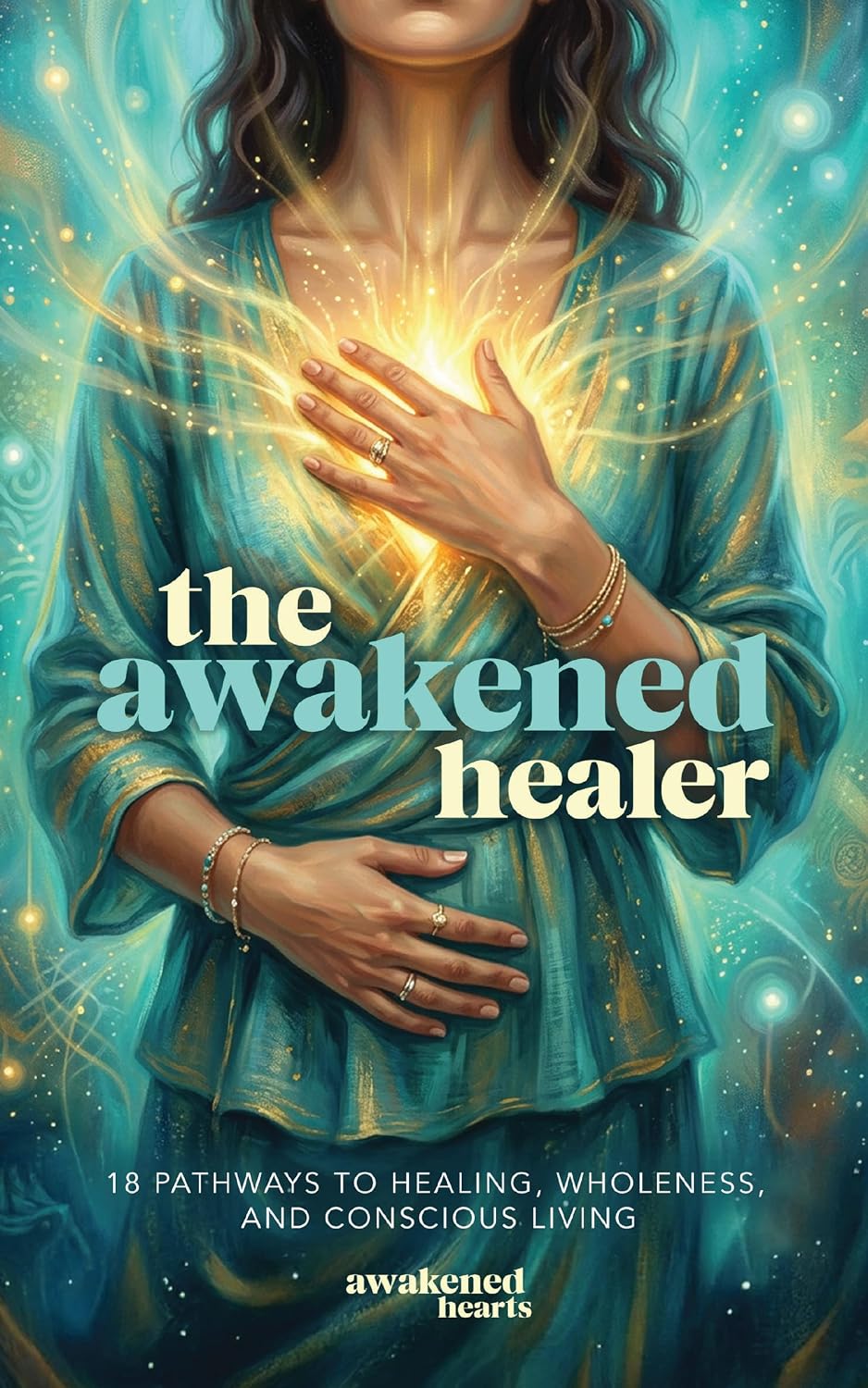
What she built instead became her life’s work. Through education, critical thinking, and a hard-won sense of self-acceptance, Laura discovered that she was never behind at all. Today she is a life coach, author, and creator of the Ocasio Goal-Setting System, and her chapter on this approach appears in our upcoming book The Awakened Healer: 18 Pathways to Healing, Wholeness, and Conscious Living. She teaches that goals are less of a to-do list and more of a journey, that the right goal stretches you without breaking you, and that a system which truly works can heal your confidence.
Whether you’re starting over, stuck in transition, or wondering whether it’s too late to begin, this one is worth your time.
Continue reading or listen in by subscribing for free on Spotify, Apple Podcasts, Amazon Music, or YouTube.

What were your thoughts about goals when you were a little kid? Goals are such a huge part of your life now as you coach people. Was little Laura goal-driven, or did that come later?
Laura Ocasio: Absolutely not. Surprisingly, I grew up in a very controlling environment where my goals were handed to me. There was already a plan for my life, but it was very much destiny-based. Achievement was the focus.
I don’t know if I would call it religious as much as controlling. It was all about how much service you could put in and advancing to the next level. The group was originally known as the International Bible Students, and later became what many people now recognize as Jehovah’s Witnesses—the people who come and knock on your door. My mother was introduced to the organization through the door-to-door ministry in the 1970s, and it appealed to her because it seemed like it had all the answers. The message was simple: follow our rules, join our group, and you’ll receive salvation and live forever in a paradise on Earth. What’s not to like about that?
There wasn’t much room for creativity or individuality. You really couldn’t do your own thing, and it was very isolating. Looking back, I can say there were some positives. As a young person, it kept me out of trouble, and I was very earnest. I was a true believer. I genuinely believed everything I was taught, and at that age, I hadn’t yet developed much critical thinking.
It wasn’t until I was in my thirties that things began to change. I started meeting people from different backgrounds with different beliefs. I wanted to explore new career opportunities and continue my education. At that time, though, women pursuing higher education or ambitious careers were discouraged within the organization.
So in my thirties, I left the group. That’s when I truly began asking questions about how to achieve goals, what actually works, and who I really wanted to become. I had to stop identifying with the group and everything that had defined me, and instead begin exploring who I was outside of it.
Were you married at the time?
Laura Ocasio: Yes. I was married to the father of my older children, and he remained in the organization after I left.
I was such a true believer, David—I was actually the one who converted him, and then I ended up leaving.
This was a huge transition for you. How did you actually leave the group? What questions were you asking, and what helped you through that process?
Laura Ocasio: When you leave a group like that in your thirties, you feel behind—and in many ways, you are. Emotionally, socially, and educationally, there are experiences you simply didn’t have. Most people go straight to college after high school, so you feel like you’re trying to catch up.
Eventually, though, if you’re determined, willing to learn, and have the right support systems—even though I didn’t have many at first—you begin moving forward. At some point, feeling “behind” no longer serves you. You realize you’re exactly where you’re supposed to be. Considering where you started, you have to give yourself credit. You were rebuilding your life from almost nothing.
That’s when mindset became incredibly important to me.
Interestingly, I didn’t begin in education or goal setting. I actually started in real estate and worked in mortgage lending for a while.
Take me back to those first questions that led you to leave. What stopped making sense? Were there people, books, or resources that helped you see life differently?
Laura Ocasio: The biggest question was simply, Do I really believe this?
The environment was very much built around an “us versus them” mentality. But once you begin meeting people who don’t believe exactly what you believe—and especially when you’ve grown up being told not to associate with them because they’re “bad association”—something shifts.
You discover that these people are genuinely kind. They’re good people. They simply have different beliefs, different backgrounds, or different religions. And that’s okay.
The more you learn about other people while honestly examining your own beliefs, the more transformation begins to happen. It doesn’t happen overnight, but slowly and steadily.
I can relate to that. I remember realizing that someone could deeply love God and genuinely love people, yet I was being told I shouldn’t associate with them. It’s such a conflicting experience.
Laura Ocasio: It really is. That’s exactly how I grew up.
It wasn’t until my thirties that I realized if I didn’t create a system that allowed me to support myself, get an education, and build work experience, I would always feel like I was missing out. Otherwise, resentment can easily take root.
There are so many emotions that come with leaving an environment like that, but you have to channel that energy into making positive changes instead of staying stuck.
Who or what helped you during that transition?
Laura Ocasio: When I went to college in my thirties, there was a program designed to help young mothers transition back into school and the workforce. Technically, I wasn’t exactly a young mother anymore, but I could absolutely relate to the challenges they were addressing.
I’ve always loved reading, writing, and learning. What I didn’t have was critical thinking.
Growing up, I learned about other religions only through the lens of people telling me why those religions were wrong. College was the first place where I learned how to research, evaluate evidence, and genuinely consider opposing viewpoints. I don’t know if you remember those “opposing viewpoints” assignments from school, but I was learning those skills as an adult.
 That experience taught me something very important. You have to recognize if you naturally see the world in black-and-white terms—where everything is either completely good or completely bad. Simply becoming aware of that tendency helps you move forward.
In one of the chapters I’ve written for Skills for Life, I say that unconditional love is actually a life skill. If you weren’t taught how to accept people exactly as they are—not who you want them to be or who you think they should become—then it’s a skill you have to consciously develop.
I truly believe unconditional love is one of the most important life skills we can learn.
You must have had people who helped support you financially or emotionally during such a major transition. Did family or friends help?
Laura Ocasio: A few of my siblings left the religion around the same time I did. We weren’t in the same stage of life—I already had two young children—but we understood what each other was going through.
One thing I often talk about in my goal-setting system is that people seem to appear exactly when you need them. Once you become aware that you need help and you start looking for resources, the right people often show up. They’re not always the people you expect, but somehow they arrive at just the right time.
I’ve also been fortunate to have lifelong friends who knew me back then and watched me grow through all of those changes.

You started in real estate and eventually became an educator. How did that transition happen?
Laura Ocasio: I was working in banking and real estate during the 2008 mortgage lending crisis. Practically overnight, I went from helping people buy homes to working in foreclosures.
I have to tell you, David, people would call me the Antichrist.
Homeownership is part of the American dream, and when you’re sitting at a bank simply following procedures, it can feel very impersonal. Of course, foreclosure doesn’t happen overnight. There are many steps along the way and opportunities for homeowners to avoid it. But emotionally, it’s completely different from helping someone move into their dream home. That work became very difficult for me.
Around 2010, I began working in an elementary school. I first worked one-on-one with a student who had Duchenne muscular dystrophy, and later I moved into a kindergarten classroom.
That’s when I discovered that education was one of the best environments for continuing my own education because of tuition reimbursement programs. It allowed me to keep pursuing my goals while serving others.
The educators I worked alongside became incredibly supportive of my journey. If you work in education, you’re usually surrounded by people who believe in lifelong learning. They understood when I said, “I’m here today, but I want to get there.” And they encouraged me every step of the way.
What did continuing your education look like at that point in your life?
Laura Ocasio: After earning my degree in Human Services, I worked in a behavioral program. I was juggling a full-time job, raising young children, and working with students who had significant behavioral challenges. There were days when chairs were thrown, people got hit with staplers—it could be a very chaotic environment. But I stayed with it and just kept moving forward.
Later, I worked in a college career center, and so much of what eventually found its way into my books came from that experience. Working in higher education and helping students navigate their futures gave me a tremendous amount of insight into goal setting, career planning, and personal growth.
Around that same time, I decided to expand my family through foster care and adoption. I had always known I was capable of loving children who weren’t biologically my own. Teaching had shown me that. I loved all of my students—they were all “my kids,” regardless of biology.
My youngest daughter, whom I adopted through the foster care system, has been with me since she was an infant. Today she’s in college, and watching her grow has been an incredible blessing.
My next career move was the one that eventually led to what became the Ocasio Goal-Setting System. I accepted a position in a Transition Program designed for students with disabilities between the ages of 18 and 21. Instead of immediately entering adult services, these students attended community college, where they learned life skills, audited classes, joined campus organizations, used the gym, and experienced college life alongside everyone else.
I absolutely loved that work.
Then something unexpected happened. My adopted daughter turned eighteen while I was working there. During her special education planning meeting, they announced that she would be attending the very program where I worked. I remember thinking, This town isn’t big enough for both of us.
That became the catalyst for another transition. By then, I had earned my master’s degree, so I began looking outside the school district. I accepted a position at a private school serving nontraditional students with diverse learning styles and sensory needs. I was hired as a college and career teacher, and it felt like the perfect fit.
One of the first units I taught to every student—from ninth through twelfth grade—focused on goal setting, time management, and organization. I initially taught the traditional goal-setting methods that most people are familiar with. Some students did very well with them, but others struggled.
Many of my students were highly sensory learners. They needed more than a written goal. They needed to imagine what it would actually feel like to have that career, attend that college, or live that future. They also needed to think about who would support them along the way. That approach felt very different from the traditional goal-setting curriculum I had been teaching.
We’re going to dive into the Ocasio Goal-Setting System, which you’ve written about in your chapter for our upcoming book, The Awakened Healer. Before we do that, I’m curious—what was missing from the traditional goal-setting systems? Why weren’t they working for all of your students?
 Laura Ocasio: I think a big part of it came from working with students who had different learning styles.
Visualization became incredibly important. Instead of simply writing down a goal, I encouraged them to imagine what achieving it would actually look like and feel like. We incorporated deep breathing and emotional regulation into the process so they could truly picture themselves already living that future. That made a remarkable difference.
Before long, I started writing my own curriculum.
Where did the idea of combining visualization with the sensory experience come from?
Laura Ocasio: It actually started with something very simple.
At the beginning of class, I would spend the first five or ten minutes playing guided meditation videos. Sometimes it was a peaceful fish tank, sometimes a waterfall, always with soft music in the background. It helped students leave behind whatever had happened in their previous class and become fully present for what we were about to learn.
As I continued developing my curriculum, I realized another important piece was missing from traditional goal-setting systems: support.
I didn’t see many approaches that emphasized discovering or intentionally building a support system. To me, everything is interconnected. Nobody achieves meaningful goals completely alone. Some students naturally have strong support systems, while others—especially adults going through major life transitions—may feel like theirs has disappeared. Learning how to identify and build those sources of support became an essential part of my system.
Another major difference is what I call the itinerary.
The itinerary recognizes that reaching a goal is a journey, not a straight line. There will be twists, turns, setbacks, and obstacles. Resilience becomes part of the process.
Life isn’t simply a checklist of tasks to complete. Along the journey toward any meaningful goal, you’ll encounter experiences that teach you something valuable. People often tell me stories about what happened before they landed their dream job or while they were discovering a hidden talent. Those unexpected experiences often become just as important as reaching the goal itself. That’s why the itinerary is such an important part of the system.
I love where this is going. Let me pause for just a moment because we’re starting to get into the details of your system, and I want everyone to really hear it.
You’ve created what you call the Ocasio Goal-Setting System. The acronym stands for: O – Visualize the Outcome, C – Clarity, A – Achievable, S – Support System, I – Itinerary, and O – Outcome Actualized.
We’ll walk through each of those because it’s a very powerful framework. Before we do, though, you’ve spent years working with young adults. Today you’re working with adults as well, correct?
Laura Ocasio: Yes, absolutely.
I originally worked with young people, then with students between eighteen and twenty-one in the Transition Program, but over time I found myself attracting many women who were going through major life transitions. They are deeply related to the experience of having to start over.
Eventually, I wanted to broaden the work even further. I wanted it to be inclusive of men as well—especially those experiencing unexpected career changes.
Where I live, companies like Kodak and Xerox were once major employers. Many people truly believed they would spend their entire careers there. Then technology changed, industries shifted, and suddenly they found themselves asking, What’s next?
That’s really what this work is about. Whether someone is navigating a career change, rebuilding after a relationship ends, or simply entering a new chapter of life, the goal-setting system is designed to help people discover what comes next and move toward it with intention.
Before we dive into the system itself, what motivates you to do this work? Why are you so passionate about helping people through goal setting?
Laura Ocasio: I truly believe that if you can help someone, and you know what you’re offering can genuinely change their life, that’s all the motivation you need.
I’ve seen this work transform people’s lives. Long before it had a name—before it became the Ocasio Goal-Setting System and before I created the acronym—I was already using these principles with people. They kept coming back to tell me how much it had changed their lives.
When you know something is making that kind of difference, why wouldn’t you want to share it? Why wouldn’t you want to help other people build fulfilling lives?
I also think it’s especially meaningful that we’re talking about this in the context of The Awakened Healer. A different approach to Goal-Setting can actually become part of the healing process. When you’ve spent years trying to reach your goals without success, it’s easy to lose confidence. Your inner dialogue starts telling you that maybe you’re just not capable.
A more effective system doesn’t just help you achieve goals—it can heal your confidence. And when confidence begins to heal, lives begin to change.

Let’s start with the first step of your system. The “O” stands for Visualize the Outcome. Why is it so important to begin with that sensory, felt experience of where you’re going?
Laura Ocasio: There are so many reasons, but one of the biggest is that visualization keeps the focus on you.
When you picture yourself already living the life you want—feeling happy, capable, fulfilled, and content—you begin connecting with your own vision instead of everyone else’s expectations.
For much of my life, I believed someone else would hand me the plan. I thought other people would tell me what I should become and how my life should unfold. But that doesn’t help you transform into the person you’re actually meant to be.
Visualization helps you stay internally focused instead of constantly measuring yourself against outside expectations. It shifts your attention away from thoughts like, I should have this career by now, or I should be married by this age, or I should already have children.
Instead, it brings you back to your own journey—to where you are right now and where your own path is leading.
What if someone comes to you and says, “Laura, I don’t even know what I want. There are so many possibilities that I don’t even know what to visualize.” How do you help someone like that?
Laura Ocasio: I usually encourage people to think of themselves as a liberal arts student.
At that stage, you don’t have to decide on one specific destination. Your purpose is exploration. You’re trying different experiences to discover what resonates with you. You’re becoming more multifaceted.
Think of it like walking through an incredible buffet. Do you really have to choose just one thing immediately?
Maybe where you are right now is exactly where you’re supposed to be—exploring, experimenting, and discovering what genuinely excites you. I actually think that’s a very healthy place to be because it means you’re not rushing into something before you’re truly ready.
Sometimes clarity doesn’t arrive until you’ve traveled farther along the journey.
I like that. So someone could even visualize themselves as an explorer or an adventurer—trying new things and enjoying the process.
Laura Ocasio: Exactly.
You can visualize yourself as someone who’s exploring with curiosity and joy, knowing that clarity will come in its own time. Sometimes people tell me, “I’ve been visualizing, but I still don’t know exactly where I’m supposed to go.”
That’s okay.
Sometimes your destination only becomes visible after you’ve traveled a little farther down the path.
In your chapter, you guide readers through a step-by-step visualization process. Could you share a few of the most important things you want people to remember while they’re visualizing?
Laura Ocasio: One of the biggest things is becoming aware of your inner dialogue.
Our minds are constantly talking. There’s an ongoing internal monologue, and the words we say to ourselves matter tremendously.
I’m not talking about affirmations. I’m talking about the way we naturally speak to ourselves throughout the day.
It’s completely normal during meditation or visualization for your mind to wander. That happens to everyone. The important part is noticing what you’re saying to yourself when it does.
The words we continually repeat internally shape what we believe is possible. In many ways, what we consistently put out into the world eventually comes back to us.
In your chapter, you call that “conscious language.” What does conscious language mean to you?
Laura Ocasio: I feel very strongly that words matter.
Not only the words we speak to other people, but also the words we speak to ourselves.
Working with people with disabilities reinforced that for me. Even the language we choose reflects how we see others. For example, I say “a person with a disability” rather than defining someone by the disability itself. The person always comes first.
The same principle applies to ourselves.
Conscious language is paying attention to the words that make up your inner dialogue—how you respond to your circumstances, how you interpret your experiences, and how you describe yourself in your own mind.
Those words become the lens through which you experience your life.
I think that’s slightly different from affirmations. They’re related, but they’re not exactly the same. Affirmations are intentional statements you choose to repeat. Conscious language is about becoming aware of the ongoing conversation you’re already having with yourself every single day.
One thing I’ve noticed about myself is that I love setting goals. I’m a very driven, Type A person. But one of my challenges is making my goals way too big. I end up overwhelmed and exhausted.
One part of your system is making goals achievable. How do you help someone find the balance between stretching themselves and taking on more than they can realistically handle?
Laura Ocasio: You almost answered your own question. That’s exactly how I think about it.
An achievable goal should stretch you—but it shouldn’t break you.
It’s meant to challenge you and help you grow, not leave you completely overwhelmed. Our minds and bodies are actually very good at telling us when we’ve gone beyond our capacity. Think about trying to learn something new. If someone throws too much information at you all at once, eventually you can’t absorb any more.
The same thing happens with our goals. If you’re so overwhelmed that you no longer have time for self-care, healthy relationships, or the other important parts of your life, that’s a sign you’ve taken on more than is sustainable.
For me, it’s really about sustainability. It’s not about proving you’re a high achiever or trying to consume as much as possible, like entering a pie-eating contest. It’s about finding a pace that allows you to continue growing over time.

What if someone realizes halfway through pursuing a goal that it’s become overwhelming? Should they simply quit? Or do you encourage them to renegotiate the goal? How do you guide people through that?
Laura Ocasio: That’s where both your support system and your stress-management skills become incredibly important.
In The Ocasio Goal-Setting System, I devote an entire section to life skills, and one of those skills is stress management. When I first began building my coaching work and pursuing my own goals, there was a tremendous amount of stress. Learning how to care for myself became essential.
That includes practices like deep breathing, progressive muscle relaxation, and other healthy ways of regulating stress. Those tools help you stay grounded when you’re feeling overwhelmed.
I also think it’s perfectly okay to reassess your goals.
You’re not traveling along a perfectly straight path. There will always be twists, turns, unexpected obstacles, and moments when you realize that what once felt right no longer fits where you are today.
There’s nothing wrong with stopping, reevaluating your direction, and making adjustments. In fact, that’s part of the journey.
Earlier, you mentioned that one of the unique aspects of the Ocasio Goal-Setting System is the emphasis on support. I don’t hear that discussed very often in traditional goal-setting systems.
If someone is creating a plan for achieving a goal, how should they think about building a support system?
Laura Ocasio: It really depends on the goal, but networking is incredibly important.
What we’re doing right now is a perfect example. As co-authors in The Awakened Healer, we’re collaborating. We’re sharing ideas, offering feedback, and learning from one another. That kind of collaboration is invaluable.
The same is true if you’re looking for a new career. You attend networking events, build relationships, and connect with people who can offer guidance and opportunities.
One thing I also teach is the importance of healthy, reciprocal relationships.
If you’re always the person giving someone job leads, encouragement, or support, there should also be moments when support flows back toward you. Healthy support systems aren’t one-sided. They benefit everyone involved.
Support systems also evolve throughout our lives.
The people who supported you during one season may not be the people who support you in the next. As you grow, you often need to build new relationships with people who understand where you’re headed and can walk alongside you during that chapter.
Support isn’t static. It’s something that continues to grow and change with you.
What does your own support system look like today? Can you give us some examples?
Laura Ocasio: Locally, I’m part of a women’s networking group made up of small business owners, creative entrepreneurs, and professionals from many different backgrounds and age groups.
Before that, I belonged to several groups in the Buffalo area where I did public speaking and continued developing my own skills. Eventually, though, the travel became difficult. Anyone familiar with the winters around Buffalo and Rochester knows how challenging the weather can be.
Today, technology has made it much easier to stay connected. Video calls, Teams meetings, and online communities allow us to collaborate from anywhere.
For me, the most important part is having people I feel comfortable sharing ideas with—people I can say, “What do you think about this?” and know they’ll give me honest feedback.
I also value having relationships with people of different generations and different backgrounds. That’s especially meaningful because, growing up, my world was very restricted.
Now I genuinely enjoy learning from younger people, hearing their perspectives, and also learning from people who are retired or in entirely different seasons of life.
Support systems often appear in unexpected places, but they still require intention. Relationships take work. You have to invest in them if you want them to remain healthy and meaningful.
For many people, asking for support is actually the hardest part. We often expect others to simply know what we need instead of expressing it. How do you help people become more comfortable asking for support?
Laura Ocasio: First, I think it’s important to acknowledge exactly what you just described. That’s a very common experience.
Most people genuinely enjoy helping others. It gives them a sense of purpose and allows them to contribute to something meaningful.
If we believe we’re all interconnected, then support naturally requires us to rely on one another from time to time.
Sometimes we forget that by refusing help, we’re also denying someone else the opportunity to experience the joy of giving.
To receive support, you have to be willing to let people in.
Many people become so accustomed to being the giver that they continue pouring into others long after their own cup is empty. That’s not sustainable.
It’s important to ask for help before you reach that point.
For people who have always been the helper, learning to receive can require a real mindset shift.
I experienced that recently. Someone flew in for one of our expos in Orange County simply because they wanted to help. I kept asking, “Why? Are you sure?” It almost felt uncomfortable to receive that kind of generosity.
Laura Ocasio: That’s such a great example.
The truth is, when you’re organizing something like an event, you almost always need another set of hands. Whether it’s setting up tables, carrying equipment, or handling unexpected details, there’s usually plenty for someone to do.
Sometimes it’s obvious that help is needed, and yet people still hesitate to ask.
The important thing to remember is that no one is a mind reader.
If we don’t ask for help, but then become resentful because no one offered, we’re creating a problem that could have been solved with one simple conversation.
More often than not, if people knew you needed help, they would gladly step in. They’d probably say, “I wish I’d known—I would have been happy to help.”
That’s why learning to ask is such an important part of building a healthy support system.

The other thing you said that sets the Ocasio Goal-Setting System apart is the idea of having an itinerary rather than simply a plan. What does the itinerary represent?
Laura Ocasio: It means a great deal to me.
When people hear the word plan, they often think of a checklist or a sequence of steps that must happen in a particular order. I’m certainly not against organization—that isn’t what I’m saying. But an itinerary feels different. It reminds us that life is a journey.
We’re not trying to reinvent ourselves. We’re trying to reach our full potential. We’re becoming who we were always meant to be.
To me, transformation isn’t about giving yourself a complete makeover or becoming someone entirely different. It’s about discovering your gifts, understanding your potential, and allowing yourself to grow and evolve.
A traditional to-do list often focuses only on the outcome. An itinerary reminds us to value the journey itself.
There’s also a personal reason I love that word. My maiden name was Tripp.
So growing up, people often joked about my last name. They’d say, “She’s a trip,” or use it in all kinds of funny ways. Back then, it wasn’t about journeys at all. But now I love the connection. Life really is a trip—a journey—and thinking of our goals as an itinerary feels much more natural to me than thinking of them as a rigid plan.
And every journey has unexpected twists and turns, potholes, incredible mountaintop views, and difficult valleys along the way.
Laura Ocasio: Exactly.
That’s why I prefer thinking of life as a journey. The destination matters, but so does everything that happens along the way. Our journey is really about transformation and becoming our truest selves.
You also talk about remembering—or returning to—who you truly are, rather than becoming an entirely new person. Tell me more about that.
Laura Ocasio: I think that’s one of the biggest misconceptions about personal growth.
Some people hear words like self-improvement or coaching and immediately think they have to reinvent themselves or completely change who they are. They picture some dramatic makeover.
I don’t believe that’s healthy.
Self-acceptance is incredibly important. There may be parts of yourself that you’re still discovering, but the goal isn’t to become someone else. The goal is to become more fully yourself.
It’s about living authentically rather than trying to become the person someone else expects you to be—or whoever happens to be trending on social media.
I understand the value of productivity. I’ve read all the books about waking up at five in the morning, maximizing efficiency, and optimizing your schedule. I taught time management, so I appreciate those tools.
But none of that should come at the expense of your authenticity.
The goal is to build a life that reflects who you truly are—not someone else’s definition of success.
I hear that concern from people who aren’t naturally goal-oriented. Sometimes they’re afraid that setting goals will somehow change who they are. What I’m hearing you say is that your system gives people permission to remain themselves while helping them grow in ways that are authentic to them.
Laura Ocasio: Exactly.
For many people, Goal-Setting carries a negative emotional charge. They associate it with fear of failure, accountability, or the pressure of committing to something they might later decide isn’t right for them.
Every year around New Year’s, I joke that it’s my holiday because that’s when everyone starts talking about goals and resolutions. I do a lot of speaking during that season because people naturally begin thinking about change.
But then there’s also what people call “Quitter’s Day”—the point when many New Year’s resolutions are abandoned.
I think that’s one of the reasons people become hesitant about goal setting. They’re afraid they’ll fail, disappoint themselves, or create unnecessary pressure.
That’s why concepts like achievability and sustainability are so important in my system.
The purpose of Goal-Setting isn’t to create more stress or set people up for failure. It’s to help them move toward their potential in a healthy, sustainable way.
We’ve been talking about your chapter in The Awakened Healer: 18 Pathways to Healing, Wholeness, and Conscious Living.
You also have several books available on Amazon, including The Ocasio System: The Complete Guide for Rediscovering Your Confidence and Transforming Your Life.
If someone picks up The Ocasio System, what can they expect?
Laura Ocasio: I think the biggest takeaway is exactly what the subtitle says—rediscovering your confidence.
We’ve talked about how transformative it can be to have a goal-setting system that truly works. When you begin achieving meaningful progress, your confidence naturally grows. I’ve had many readers tell me the book has been genuinely life-changing.
 Another of my books, Journey to Transformation, walks readers through my coaching process. I believe in being transparent, so I share the actual modules we work through together—awareness, stress management, and many of the same concepts we’ve discussed today.
Then there’s Skills for Life, which grew out of my experience teaching life skills in high school. It’s essentially an adult version of those lessons—practical skills presented in a way that’s meaningful for everyday life.
Finally, there’s Becoming, which really captures the heart of everything we’ve talked about today.
If there’s one message I’d want people to remember from this conversation, it’s this:
Transformation isn’t about changing who you are.
It’s about rediscovering the gifts, strengths, and talents you already possess, and learning how to use them to reach your fullest potential.
You also offer one-on-one coaching. People can visit your website, LauraOcasio.com, and schedule a complimentary clarity call. Who do you most enjoy working with?
Laura Ocasio: People who are in transition.
That transition might be a career change, moving to a new place, beginning or ending a relationship, or becoming an empty nester after your children leave home.
Whenever life shifts in a significant way, people often find themselves asking, What’s next?
Those are the people I love working with because they’re ready to move forward—they just need clarity about the next step.
Laura, thank you so much for contributing to The Awakened Healer, and thank you for the work you’re doing in the world. It’s been a pleasure having you with us.
Laura Ocasio: Thank you so much for having me.


