


Experience a Reality Revolution and Meet Your Future Self – An Interview with Brian Scott
What if the life you want already exists, and you just haven’t stepped into it yet?
Brian Scott had read thousands of books on the mind and spirit, yet his own life was falling apart. So he decided to test everything he knew on himself. He meditated for hours at a time until he began to feel other versions of himself, and his life started to change. Then, on the night the Broncos won the Super Bowl, someone appeared at his back door and fired a gun. The bullet bounced off his back, and surviving that night gave him a new purpose, to share what he had learned.
In this conversation, Brian opens up about the beings he calls the Operators, who speak through his automatic writing. He also explains why feeling and identity shape the reality we live in, and how meeting your future self can shift who you are. At the heart of it all is self-love, the glue that holds everything together.
Continue reading or listen in by subscribing for free on Spotify, Apple Podcasts, Amazon Music, or YouTube.

With everything happening in the world, I see many challenges, but also many positives. What do you sense is unfolding on our planet right now?
Brian Scott: That’s a great question, and there are many possible answers. For the average person scrolling on a phone and consuming an endless stream of negative news, it may look like the world is falling apart. It can feel like we’re losing hope and facing struggles that history tells us will only get worse.
But behind the scenes, within consciousness communities and through the people I meet in coaching sessions and in real life, I see a different world. I feel hopeful and excited because I believe we’re moving through a shift in consciousness.
What looks like chaos may actually be the final lash of the dragon’s tail before it dies. That metaphor captures how I see this moment. Consciousness itself is changing.
Ask yourself who you were 10 years ago. What occupied your mind every day? What concerned you, and what did you spend your time thinking about? You’re probably a very different person now.
I don’t think that change is only the result of what you’ve personally experienced. Something else is transforming our consciousness and the way we perceive the world, and it’s happening globally.
One of the biggest changes I see is a growing empathy. Some people don’t know how to process that empathy, so they reject it. It can also create distortions, making people appear irrational, extreme, or unlike how they behaved in the past.
Ten or 15 years ago, we might have seen an injustice reported in the news and simply moved on. Now we experience those injustices within ourselves. They affect us more deeply and provoke a different response.
People are becoming more vocal and determined as the veil lifts. We’re beginning to recognize ourselves in everything around us. That is one of the most significant revelations of this period.
The truth is also coming to the surface. As our consciousness changes, we seem to have a stronger sense of what is right and wrong. When we watch someone speak, many of us immediately sense whether that person is being truthful. That inner knowing is changing how we interact with the world.
The major events shown on television are part of an algorithm and a larger design. Behind those stories, however, people are changing, and the world is changing with them. I believe extraordinary things await us.
When I look at emerging technologies and discoveries, I feel that we may be witnessing the true beginning of the singularity. I’ve heard reports of hundreds of mathematical problems being solved, including questions people have spent entire lifetimes studying.
I agree with Robert Edward Grant that as our understanding of mathematics changes, our consciousness changes with it. We begin perceiving the world differently.
It reminds me of the film Arrival. When the protagonist learns the aliens’ language, her experience of time changes. I believe something similar may be occurring collectively.
As these new understandings emerge, we’re moving into a different level of consciousness. Something is awakening within us, and it’s incredibly exciting.
Deep down, I believe we chose to be here at this time. Earth may be the most extraordinary place in the universe to be right now because of the scale of the changes unfolding.
We each have a role in that transformation. Everyone watching or reading this has a role as well. If we actively participate in the change, we can help create a planet more beautiful and extraordinary than anything we’ve imagined.
I hear so much hope coming from your heart and mind.
Brian Scott: I genuinely believe new revelations are coming. I’m hopeful that emerging research and technology will lead to major breakthroughs in cancer treatment and many other areas of health.
I also believe we’re beginning to understand the biofield more deeply, which could change how we approach the body and well-being. Through a combination of technology and expanded inner consciousness, we may eventually extend human life in ways that are difficult to imagine today.
I also envision a prosperous planet. Imagine what the world would look like if everyone had enough and could genuinely thrive. I believe we’re moving toward a state of far greater collective prosperity.
Part of that confidence comes from the work I’ve done connecting with my future self. Through those experiences, I’ve seen a vision of this future. I’m excited for it to unfold, and I feel that I’m here to help bring it into being.
I’d like to return to your childhood. Did spirituality, faith, consciousness, or mindfulness play a role in your household, or did those interests emerge later?
Brian Scott: I was raised Methodist in Cheyenne, Wyoming. We were a typical churchgoing family. I attended Sunday school and learned the standard interpretation of the Bible that many people receive.
That worked for me up to a certain point, but I was always deeply inquisitive and wanted to understand everything. I was also gifted with the ability to read very quickly. I could finish an entire book in an afternoon, a skill I further developed through college debate.
I felt almost consumed by a calling to acquire as much information as possible. From high school onward, I spent 10 or 15 years trying to read everything I could. I even bought a bookstore because I felt that something was missing and that I needed to keep gathering information.
What subjects were you most drawn to during that period?
Brian Scott: Anything spiritual. I read different versions of the Bible and explored every spiritual text I could find. I studied occult and metaphysical works, self-help books, and thousands of other titles.
In college and graduate school, I became particularly interested in neurolinguistic programming. I wanted to understand the patterns and formulas in speech and how language could change consciousness.
For a while, I worked as a stage hypnotist. I started at the University of Wyoming, and one summer I performed at county fairs. I would bring people onto the stage and give them suggestions, such as telling someone they were a chicken.
The experience became a major revelation for me. In almost every audience, approximately one-third of the people were highly responsive to hypnosis. When it was done effectively, the process almost seemed like a superpower.
If I told someone, “You are Einstein,” they might start acting as though they could write a physics paper. It appeared to unlock capacities within them. Another third of the audience rejected every suggestion immediately, and a middle group responded to varying degrees.
That taught me how powerful consciousness can be, both positively and negatively. I also began recognizing how some preachers and spiritual leaders use the human voice to influence people.
I became increasingly aware of the tactics, messages, and forms of manipulation used by certain spiritual authorities. That led me through a kind of desert period.
I would search for a teacher or mentor, only to recognize that the person was trying to manipulate me. I always had that filter operating in the background.
Eventually, I decided to seek answers within myself through meditation. I became what I call an inner-consciousness astronaut.
Then I entered a very dark period. I owned an online bookstore and was working 18 or 19 hours a day. The business left me deeply in debt, and I was drinking too much.
My parents had died, my first wife had left, and I felt as though I had lost my children and everything else that mattered. I reached a point where I didn’t want to live anymore. I had nothing left to hope for, no one was coming to save me, and I believed I was about to lose everything.
My business wasn’t succeeding, so I returned to everything I had studied and challenged myself: “Can I use my consciousness to change my reality? If this is all I have left, then I’m going to commit to it completely.”
I was fortunate to be in a position where I could dedicate time to the process. For several months, I meditated for hours at a time.
Eventually, I began having experiences in which I felt myself entering different realities and connecting with alternate versions of myself. I started using those experiences to create significant changes in my life.
Suddenly, I met the love of my life. My business began thriving; I no longer had to work 19 hours a day, and I found people who could help me. My bills were paid, and everything seemed to transform.

Had you learned how to do this through books about quantum jumping?
Brian Scott: I was certainly influenced by teachers such as Burt Goldman, Cynthia Sue Larson, and Frederick Dodson, who explored quantum ideas and the relationship between consciousness and reality.
But that was still only book knowledge. My journey required me to take it to the next level by entering meditation and testing the ideas for myself.
The experiences became so profound that manifestation sometimes seemed instantaneous. My life was going remarkably well. Then, on the night the Denver Broncos won the Super Bowl, everything changed again.
My girlfriend and I came home and sat down on the couch. I noticed that the back door was open and wondered whether I had accidentally let the cat out.
When I looked up, a person was pointing a gun at me. I shut the door and turned, and he fired.
I heard the gunshot and saw the bullet pierce the double-pane glass. Time slowed down. I saw multiple versions of myself laid out before me.
In one, I was lying in a pool of blood. In another, I was falling in a different direction. Then I saw one version in which I survived.
I moved into another room and watched the bullets pass as though I were in The Matrix. When I escaped that moment, I felt as though I had entered a different universe.
At the hospital, they told me the bullet had struck my back and bounced off. Perhaps the gun’s caliber and its passage through the glass reduced its force. But I knew I could have died.
I felt overwhelmed with gratitude to be alive. Every moment became a gift.
I also realized that I had accumulated all this knowledge and used it only for myself. From that moment forward, I felt an overwhelming drive to share what I had learned and ask whether it could help other people experience similar transformations.
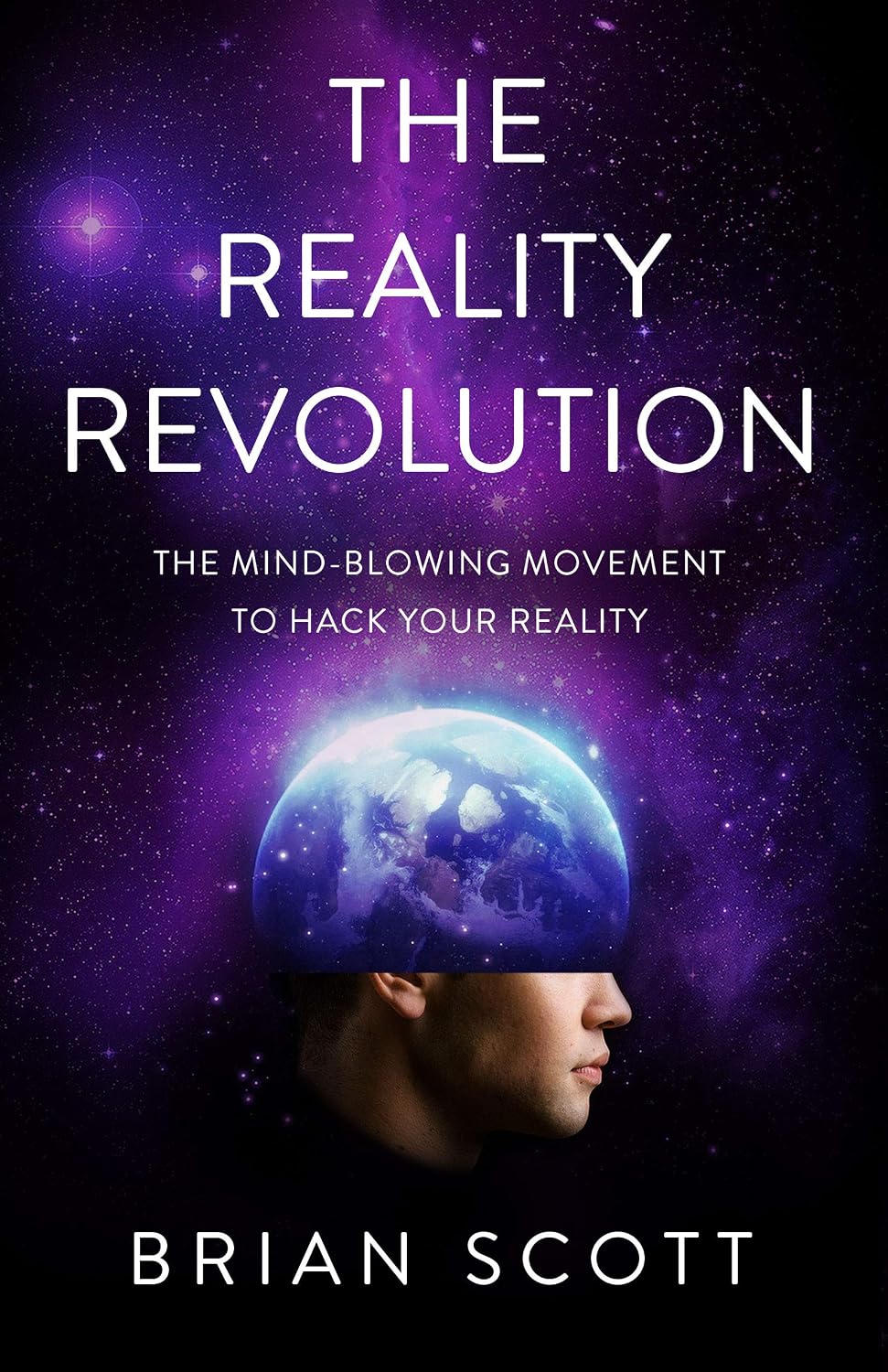
That is the short version of how my work began. I wrote The Reality Revolution and started creating YouTube videos and guided meditations.
People were drawn to my voice, but they were also sharing in my spiritual journey. I would discuss something I had learned, and then we would test it together through meditation.
Over time, the YouTube channel and podcast continued expanding and evolving. We’ve been exploring consciousness together ever since.
Your book, The Reality Revolution, was released shortly before the pandemic. What happened as you continued publishing videos during that period?
 Brian Scott: Unlike many people, I experienced the pandemic as a kind of paradise. I naturally carry a hermit energy, so suddenly I didn’t have to go out or attend parties. I could simply say, “I’m sorry, we can’t make it.”
I thrived during that period. More people were also willing to try meditation and explore my channel, so the audience grew significantly.
I believe it became an important awakening period for many people. They were forced to remain at home and spend more time thinking about themselves. Many discovered my work during that process.
It has been exciting to witness the gradual unfolding and expansion of The Reality Revolution community.
So many people describe 2020 as a major turning point in their lives. Something incredibly difficult became the catalyst for profound change. I’d like to explore your view of reality. Does reality exist, and can we change what we see, touch, taste, and feel? What is “Reality 101” from Brian Scott’s perspective?
Brian Scott: That’s a huge question, and it was the central question behind my podcast: What is reality, and can we influence it?
I’ve been trying to answer that question every day. The answer continues to evolve, but the clearest thing I see is that reality is mind.
Everything I perceive around me is myself pushed outward. It is an extension of me, and I believe it is holographic in nature.
When you describe reality as holographic, what do you mean?
Brian Scott: I mean that every part carries information about the whole. I also mean that reality may not be real in the way we ordinarily assume.
In 1940, most people wouldn’t have understood the word simulation in its modern sense. If someone in the biblical era had used that word, no one would have known what it meant, so spiritual texts naturally used other language.
My current understanding is that we created this reality and that it functions somewhat like a simulation. It places the soul within an experience designed to bring something out of us.
I believe many realities exist, each with different rules, experiences, dimensions, and levels of consciousness. In the shared reality we’re experiencing now, there appears to be what I call a law of confusion.
We aren’t meant to know reality’s complete truth. We can search for it and believe we understand pieces of it, but we may never fully know. I think that limitation exists for a reason.
Knowing everything would take away from the purpose of entering the simulation. A veil has been placed over our consciousness, so we’re here to explore the nature of reality without having the full answer given to us.
I also believe reality communicates with me. Everything around me is part of a larger version of myself, but it also seems to be sending information back to me.
My work involves asking how I can influence reality, change it, and move through it. Consciousness appears to participate in its design, and I believe we can shift our experience by using consciousness in particular ways.
Each person seems to inhabit an individual reality tunnel or bubble. My subjective reality is different from yours, even though our experiences overlap.
Each person’s reality may express somewhat different patterns and laws. It is influenced by the subconscious mind and many other factors, but at its foundation, it appears to be guided by thought and consciousness.
I don’t claim to have a final answer. This is something I’m continuously learning. As I learn, I experiment, and each experience adds to my evolving model of reality.
My current understanding is that everything around us, including all the books behind me, is vibrating energy. That energy has condensed into crystallized vibrations that appear solid.
I believe all of reality is light. In the biblical phrase “Let there be light,” light marks the beginning of reality. That light vibrates and spins in different ways, and we are expressions of that same light.
The books behind me are part of me. Everything is part of one complete substance. I’m continuing to learn what I am within that substance and how I interact with it.
That is one reason people come to my work. They find that my material helps them better understand their own reality bubbles.
You’ve said that we create reality through the mind or consciousness. How, then, can we change what is happening around us? I know this is manifestation 101: I see it, I feel it, and I take action. How does your perspective align with or differ from that basic understanding?
Brian Scott: There’s a reason those teachings have endured: they work. You don’t need to understand physics, mathematics, or anything complex. To begin creating your reality, feeling is the secret. The body carries tremendous knowledge and intelligence, and what you’re seeing right now is a reflection of what you were thinking and feeling in the past.
Everything around us is an expression of what we have previously thought and felt. As we learn to consciously adjust our feelings, we begin to see those changes expressed in our external experience. We can engage any number of senses in this process, but essentially, our imagination is creating reality.
When I speak of imagination, imagination to me is God. When we daydream and imagine, we connect as closely and deeply as we can to God. Imagination creates reality, and feeling is the cement that makes it real. Someone can sit and daydream about something, but without feeling behind it, it may not come into being because it remains in the ether.
Feeling is what brings the imagined experience into reality. But another essential part of changing our reality is identity. Identity is really the key, because we can imagine and practice all these techniques while still carrying an underlying identity that says we do not control our reality. We may believe we are subordinate to some outside force that will never allow us to have what we desire unless we deserve it or earn it.
These underlying operating systems can be embedded within our identity. They reach into the subconscious and even what I would describe as ancestral programming. Not all of this programming exists in conscious thought, which is why feeling is such a good place to begin. What we feel often reflects what is happening within the subconscious mind.
I want to explore identity and how we see ourselves. In your retreats and teachings, you talk about the future self. I assume that involves seeing your identity differently. How does the way I identify affect what plays out in my life, regardless of what I may be consciously thinking or feeling?
Brian Scott: I believe this represents a new evolution in how we understand manifestation. In the earlier model many people encountered through The Secret, we envision something, feel it to be true, and then it happens. If I want an apple, I imagine seeing and tasting the apple, and eventually I find myself eating one. That is the beginning of the process. It is manifestation kindergarten.
Through my own experimentation and work with clients, I began to understand that infinite versions of ourselves exist within the multiverse. There may be a version of you experiencing homelessness and another version who is a billionaire. Infinite versions of you have mastered different skills and followed different paths.
When you say there is another version of me, do you mean a real, physical, three-dimensional version who is actually having that experience somewhere?
Brian Scott: There are two ways to answer that, and it isn’t necessary to decide whether it is literally true or false. The field we enter during meditation can be understood as a field of alternative possibilities that contains information about those alternatives. If someone cannot accept the idea that a physical version of them exists somewhere else, that is perfectly fine. They can simply work with the information available within the field.
Personally, based on my experience, I believe those versions are physically real. But you do not have to believe that to explore this through consciousness. A helpful analogy is dropping a basketball. Before the ball lands, the field contains all the different possibilities for how it might bounce. We are attempting to interact with that field of possibilities before the ball bounces.
At my events and retreats, we use breathwork and meditation to enter deep states of consciousness and engage in what I call a quantum jump. Early in my work, I explored this idea by looking at models of quantum processes, where particles gain energy and appear in another state rather than moving there in a continuous, observable way. I began inviting people to use their imagination, generate a strong feeling, visualize portals opening, and use breathing exercises to energetically enter another reality.
That approach worked well, but people often found their old reality pulled them back. The change did not always stick. That led me on a journey to understand how we could create a transformational experience that produces a lasting change in someone’s reality. I didn’t want someone to manifest a new house only to lose it to foreclosure a few years later. I wanted to help people manifest an entire life in which things continually improve, and they experience the best possible version of the life they could live.
During an event, after the quantum-jump experience, the next step is to connect with the version of yourself who has already lived the life you desire. First, we connect with a higher self that can see the roadmap. There may be millions of possibilities, but one particular life holds your purpose, authentic friendships, freedom and prosperity, and things working out for you. Your higher self guides you toward that possibility.
We then enter imaginal experiences and elevate our emotional state through joy and gratitude. Within the heart space, we meet the future version of ourselves who has done and experienced everything we desire. We begin to connect with that version, speak with them, receive answers to our questions, and eventually merge with them.
When people leave the experience, they no longer identify entirely with their old selves. They begin to identify as the future self who knows everything will work out and has access to the roadmap. That version may guide you toward a particular person, opportunity, or idea. My future self might say, “You need to talk to David because he is going to help you,” and suddenly I find myself doing an interview with David.
I call this process the “future pull,” which is also the subject of the next book I’m developing. You continue connecting and working with this version of yourself until it begins to pull you forward. At first, it may feel like a separate voice telling you to turn left, meet a particular person, or pursue a new business idea. Eventually, it no longer feels like an additional voice. You become that version of yourself.
Your identity changes, and suddenly you are the future self, with the confidence, knowledge, and inner resources that come with it. For me, this has been like capturing lightning in a bottle. It feels like the final stage of the process we have been teaching, and it is incredibly exciting.
I also believe it represents the beginning of our spiritual expansion. Ultimately, we move beyond our ordinary perception of time and space and connect with different versions of ourselves, including the past version who endured certain experiences and the future version who has already moved through them. We begin to recognize ourselves as one entity existing throughout time. We realize that we are not simply present in this one “now.” We are present in all the nows.

What role does self-love play in this process? If I don’t love or appreciate myself for who I am, how could I ever navigate the experiences you’re describing?
Brian Scott: Self-love is absolutely essential. What I have found is that when people who lack self-love connect with their future selves, they often discover that love through the experience. That shift in identity can change everything for them.
When you lack self-love, that absence often shows up in the love you experience in your life. Everything is a reflection. Self-love matters because it’s hard to fully receive love until you find love for yourself. That breakthrough changes everything because love is the key to the entire process.
I believe this reality is filled with lessons about love. From the moment we meet our parents, we begin learning about love through our mothers and fathers. We continue learning through our friends, the people we meet at school, our partners, and everyone else who enters our lives. Some of those lessons are extremely difficult. The word “love” may sound like everything should be perfect, but these experiences aren’t always pleasant. They are still lessons in love.
One of the greatest revelations in our understanding of love is self-love. I couldn’t fully experience love with my wife until I began to find love within myself. Without self-love, I do not have the confidence to pursue what I want, nor do I have the ability to create meaningful change. Self-love is the underlying glue that holds everything together.
I also believe that when you move into an expanded state and connect with these greater aspects of yourself, self-love can arise naturally. It does not necessarily require a year of working on yourself before you are allowed to feel it. Sometimes there is an immediate recognition: “Of course I love myself. I am part of the one being that created the universe. How could I not love that?”
Have you explored psychedelics as a way of experiencing any of these levels of reality? Feel free to pass on the question if you would rather not discuss it.
Brian Scott: Absolutely. I’ve “tripped the trip,” let me put it that way. Looking back, I would say I owe a great deal to my first experience with LSD. I was in college, attending a national debate tournament, when someone introduced me to it. During that experience, I could see energy flowing through the trees and through me, and it gave me a powerful confirmation that there was more going on than I had previously understood.
Since then, I’ve had opportunities to experience peyote and, of course, mushrooms. With each experience, I felt I was learning lessons and communing with what I perceived as a powerful intelligence. But over time, I discovered something important.
Imagine that my ordinary level of consciousness and vibration is here, and then I take LSD and it brings me up to a new level. I think, “This is a whole new level of consciousness.” But as my baseline awareness expanded, I reached a point where taking LSD could actually bring me back down to a level I had already moved beyond.
Psychedelics can enable you to glimpse a higher state, but in many ways, they are like dipping your toe in the water. They may take you on a journey through the desert and bring you close to the promised land, but they will not necessarily carry you all the way there. Some people believe they will find their ultimate answer in the psychedelic experience, but I see psychedelics as revealing what is available to us. They unlock a door and show us somewhere we may eventually learn to go on our own.
For me, true enlightenment and expansion were not going to come through psychedelics alone. Psychedelics opened the door and offered convincing evidence that something more was happening. But I have also seen people have an extraordinary psychedelic experience and then spend their time trying to recreate it. They begin chasing that experience again and again, but that was never the point.
The point was, “Let me show you what is available. Now you can learn to find it on your own.” That is how I approach the role of psychedelics in spiritual exploration.
I also believe they can have an important place in healing. Research increasingly suggests that certain psychedelics may have significant therapeutic benefits when administered responsibly in controlled clinical settings, including potential benefits for people experiencing depression. As we enter what could be called the age of psychedelics, I think more of these substances will be studied and potentially prescribed.
The important thing to remember is that you do not want to become dependent on them. A psychedelic may be a gateway that opens something within you, but it is not necessarily the destination.
That’s interesting. Tim Ferriss recently discussed dream engineering with Kevin Rose, a subject I had not explored before. He talked about becoming increasingly interested in lucid dreaming and emerging research into anesthesia-induced dreams. In carefully monitored medical settings, researchers are exploring whether dreams experienced while emerging from propofol anesthesia could help people reimagine traumatic experiences. It seems like another avenue for accessing transformative states of consciousness.
Brian Scott: I would love to explore that because I teach and talk about lucid dreaming quite a bit. I think it is an important part of becoming a conscious creator of reality. In my view, what we are experiencing right now is similar to a dream, although it operates somewhat differently.
In lucid dreaming, you learn to wake up within the dream. I’ve created meditations using binaural beats in which, every 20 minutes or so, I say, “You’re dreaming,” as a reminder. I have found that the more lucid you become in your dreaming state, the more lucid you can be in your waking state.
You practice this by regularly asking yourself, “Am I dreaming?” Eventually, you may be going through an ordinary day, ask yourself that question, and suddenly realize you are dreaming. In that moment, you wake up inside the dream. I think cultivating that kind of lucidity is extremely important.
I don’t believe lucid dreaming is something we necessarily need a drug to experience. Everyone has the potential to become lucid during a normal sleeping state, and avoiding certain substances may actually help. But if studies explore other approaches, I would certainly love to read them.
I believe lucid dreaming can take us somewhere beyond what psychedelics alone can offer. Increasingly, we may discover that learning to become lucid in our dreams is one of the keys to becoming more conscious creators of our waking reality.
What does an average week in the life of Brian Scott look like at this stage of your service and evolution? How does meditation fit into your life? What about physical activity and the work you do through your platform? Take us behind the scenes.
Brian Scott: I publish a video every day, and people often ask, “How do you do that, Brian?” I’ve created around 2,600 videos over a long period of time, so people sometimes imagine that I must constantly be working. But it really isn’t like that.
I meditate in the morning and make space for that experience. Then I enjoy a good breakfast with my wife, and I like to work out regularly.

Where do you meditate? How long do you meditate, and do you use music or create a particular atmosphere?
Brian Scott: My favorite place to meditate is outside in the sun. Sometimes I meditate in silence, and sometimes I use a guided meditation. I have created more than 400 guided meditations for my channel, so I’m often experimenting with ideas I might incorporate into meditations for others.
What people eventually experience through my work often begins with me trying something during my own meditation. I may think, “I tried this and found it powerful. Let me guide other people through it.” I create meditations for myself as experiments, practice with them, and observe what happens.
My daily process includes integrating qigong exercises, raising my energy, entering meditation, and having powerful imaginal experiences. I also go to the gym regularly, which has always been very important to me.
I generally work four days a week. From Monday through Thursday, I record a couple of episodes each day, which allows me to stay ahead and take a three-day weekend. My wife is happy to let me work some extra hours during the week so that we can enjoy those longer weekends together. I make a conscious effort to maintain balance.
I’m also constantly reading and gathering information for my work. But my meditation practice has evolved. I meditate less formally now because I often feel as though I am in a continuous meditative state.
When I want to reach a higher state, it feels as if I can enter the space between seconds. I’ve reached a point where I feel anchored enough to enter that space almost instantly, without needing to go through an extended meditative process. Increasingly, everyday life feels like an ongoing series of evolving meditative experiences.
People can access your videos online, but you also have a private school and community where you regularly publish content, along with upcoming retreats. Tell us about those opportunities.
Brian Scott: It took me quite a while to create a community. Many people launch one immediately, but I kept thinking, “I need to develop this in a way that genuinely makes sense.” Eventually, someone helped me establish the Reality Revolution community on Skool, and it has been an amazing experience.
We can offer exclusive content and explore subjects more deeply than we are able to on YouTube. We create worksheets and teachings, and I can provide live group coaching. The community recently celebrated its first anniversary, and it has grown into something truly special.
When you create a community like this, it begins to feel like a soul family. It is filled with amazing people, and it’s been incredibly rewarding to work with them more closely, understand where they are in life, and help them move toward their goals.
Another essential part of creating your reality and living the life of your dreams is stepping outside yourself and serving others. This community has given me a wonderful platform for helping others, and that has been deeply fulfilling.
People can find the community through your website. You’ve also been holding retreats with Kyle Boyd quite regularly, haven’t you?
Brian Scott: Yes, we’ve been holding a retreat approximately every two months, and each one has evolved into something new and even better. I taught public speaking in college, but I had become very comfortable sitting in my office. I had that hermit energy going.
Eventually, Kyle said, “Come on, you have to do a live event. What are you doing?” He pushed me to try it, and we quickly discovered that people were excited about gathering in person.
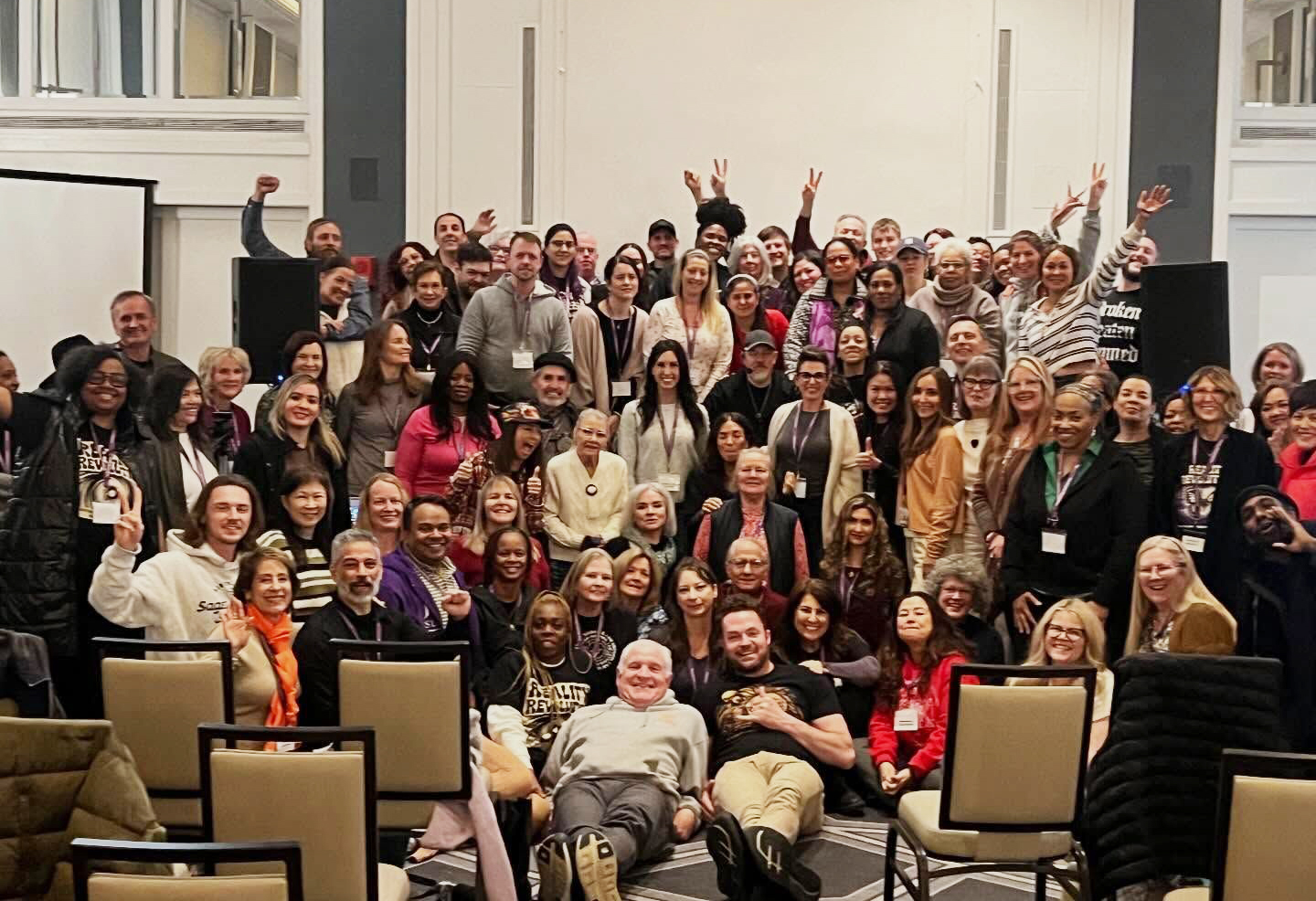
The retreats are an extension of what we do through the channel. We can create a three-day experience that combines meditations in a deliberate sequence, with each practice designed to bring something forward. Over time, this developed into the future-self process I mentioned earlier.
We guide people through a quantum-jump experience in which they enter their desired reality, meet their future selves, and learn to navigate the identity shift that follows. We explore money, healing, love, and other important areas of life so that people leave feeling genuinely transformed.
More than anything, the opportunity to connect in person is a game changer. We often talk about a new Earth and a shift in consciousness, but one essential element people sometimes overlook is our need to speak face-to-face.
Having once worked in a church, you know what I mean. Regardless of what is being taught, something powerful happens when people gather around a shared purpose. A connection forms within the group.
Our retreats have become magical spaces where people from all walks of life can meet, support one another, and communicate openly. That has been one of the greatest revelations for me. These events give me a platform for creating the kind of transformation I began imagining after I was shot.
At that time, I asked myself, “How can I apply what I’ve learned?” These retreats feel like the ultimate fruition of that question. I’m even drawing on some of the same skills I once used as a stage hypnotist, but now I use them to help facilitate a shift in consciousness. The intention is to help people become their future selves and begin living within their greatest timelines. It is incredibly exciting, and we love doing it.
You have upcoming retreats in Sedona and Nashville. Where can people find the details?
Brian Scott: The links to our events are usually included with every video, and people can find current information through The Reality Revolution website and our event pages. We also livestream certain events through our Skool community for people who cannot attend in person.
What do you love about Kyle Boyd?
Brian Scott: There is so much. He is one of my best friends, and he has a truly beautiful mission centered on heart coherence. You can sense that he has a genuine purpose behind everything he does.
He is a wonderful organizer who has helped facilitate so much of this work. He is constantly looking for ways to help people and be of service. Meeting him felt like finally meeting my brother.
When we began working together, we realized we could create something neither of us could accomplish alone. He supports me in areas where I am weaker, and I am there to support his vision of bringing heart coherence to the planet. I think he has done a wonderful job of advancing that mission.

I had an opportunity to speak with both of you a couple of weeks ago, and a channeled message came through during our conversation. My team often sees people very clearly, and although I didn’t know either of you personally, they described the tremendous positive power and life-force energy within you. The beauty of channeling is that I can sometimes see what they are describing. It may sound strange to say that I could see inside you, but I felt that I did, and what I saw was beautiful.
Brian Scott: I know exactly what you mean because I experience that too. I’m honored. Hopefully, we cleaned things up in there for you!
You’re interested in many subjects, but you’re clearly fascinated by channels and have interviewed a great number of them. What is it about channeling that intrigues you?
Brian Scott: I’ve always been interested in channeling because I believe channels have consistently been at the leading edge of consciousness. That goes all the way back to the Seth Material and Abraham-Hicks, along with many of the other classics.
As an avid reader, I’m a complete enthusiast for compelling channeled work. Paul Selig’s work, for example, has profoundly changed me. Eventually, I began channeling through automatic writing myself, connecting with a group called the Operators, who describe themselves as being responsible for the simulation. That experience has been a revelation.
The process of channeling requires you to open yourself to an intelligence and allow something to come through. As you have probably learned yourself, that process teaches you a great deal about who you are. It gave me tremendous respect for channels who have been practicing this for decades.
There is a developmental process. You improve with experience and begin to distinguish where a message is coming from, which parts are not your ordinary conscious mind, and how to quiet yourself so that something else can come forward.
I believe we are all channeling in some form. I recently interviewed Emmanuel Dagher. He never claimed to be a channel, but he would close his eyes, and these beautiful insights would emerge. Then he would return to the conversation. It reminded me that people may be channeling all the time without necessarily identifying it that way. Perhaps they are channeling their higher selves.
A message that recently came to me described us as library cards for these intelligences. A multiversal entity can use us as a point of access to speak, communicate, and experience what is happening here.
I believe these intelligences may be at the forefront of helping us navigate what we are experiencing, which can be an incredibly complex and frightening time. These communications may offer perspectives that help us understand where we are.
I am also a great admirer of The Law of One material. It is one of the bodies of work I respect most and return to regularly. I believe we need these different voices and perspectives to come through.
In the past, people assumed we would discover extraterrestrial intelligence by pointing a giant radio telescope into space and listening for radio signals. But what if advanced intelligences do not use radio? That assumption is based on our own limited model of communication. I believe we are more likely to connect telepathically with intelligences elsewhere in the universe, through the mind.
That possibility is one reason I have researched channeling so extensively. Once you enter that world, the universe seems very busy, with many different entities and messages coming through. Discernment is essential.
Sometimes I listen to a channel and think, “I don’t know about that. Something doesn’t feel right or align with me.” Other times, I listen and feel my heart burst open. I get goosebumps and become genuinely excited.
Ultimately, I’m seeking information, much as I do when reading a book. Speaking with a channel is like opening a new book and asking, “How should I evaluate this? What does it mean, and what can I learn from it?” For me, channeling represents another place where I may find information about the universe.
I want to speak with as many channels as possible because, more often than not, I learn something. Sometimes it goes beyond intellectual learning. The message carries something that activates a recognition within me.
I’ve had the opportunity to speak with many channels, and those conversations continually teach me about the questions at the heart of my own work: How do we change our reality? What is happening in the world? What is reality itself? Channeling offers perspectives on those questions.
Teachers such as Abraham-Hicks and Seth spoke about our ability to change reality, which naturally drew me to their material. If someone offers insight into how reality may change, I want to understand everything they have to say.
I’ve also noticed that some groundbreaking works about reality, including Reality Transurfing, have later been described by their creators as having arrived through a form of channeling. Increasingly, I find that some of the most original information is emerging through channels.
Brian, it has been wonderful being with you. Thank you for everything you’re doing for the world and for your dedication to publishing content every day that helps people. Hundreds of thousands of people are being put to sleep by you every night, in the best possible way! Thank you for all you do.
Brian Scott: The joke is that women sometimes tell me, “Brian, I sleep with you every night.” When I wished for that as a kid, this was not exactly what I had in mind!
Close, but not quite! It has been great being with you. Thank you so much.
Brian Scott: Close, but not quite. Thank you, David.


