Healing the Soldier Within: A Veteran’s Journey from PTSD to Spiritual Awakening – An Interview with Advin Illa
What does healing look like for a soldier long after their time in war is over?
Advin Illa became a father at seventeen and joined the Army to provide for his son. In Iraq, he served as a combat camera soldier, documenting hundreds of missions and trained to keep filming no matter what was happening around him. When he came home, the isolation that had protected him overseas followed him into daily life. For five years, he thought about trying plant medicine but held back out of fear. When he finally took that step, he wanted to be reborn and to understand God. He came back a believer.
In this conversation, Advin shares how each turning point in his life became what he calls an awakening, and why so many veterans are still afraid to talk about mental health. He explains how acting and filmmaking have become a new way to serve, and how the Beyond the Fight retreat is designed to help veterans find their voice again through storytelling. For Advin, every awakening changes your path, and today his path is helping other veterans find theirs.
Continue reading or listen in by subscribing for free on Spotify, Apple Podcasts, Amazon Music, or YouTube.

I love discovering someone’s biography online and realizing how many twists and turns their life has taken. You’ve been involved in so many different worlds. Let’s begin with the military. What led you to join the Army, and what was that experience like?
Advin Illa: I’m from Puerto Rico and grew up in a small town there.
By the time I reached high school, I had a general sense of where I might be headed. I imagined becoming a police officer, serving in the military, or perhaps becoming a pilot. Those kinds of careers appealed to me.
I took the ASVAB in high school, but then I set the idea aside for a while. At 17, I became a father.
How old is your son now?
Advin Illa: My son is 21 now, but I was only 17 when he was born. When you’re responsible for another human being, it becomes easy to forget what you originally wanted to do.
That must have completely changed the direction of your life. How did you navigate becoming a father so young?
Advin Illa: I call it my first awakening because it genuinely changed my path. I believe that every awakening redirects us in some way, and becoming a father was my first true awakening.
I eventually joined the military because there were times when my child didn’t have enough food. The decision came from necessity more than anything else.
I was working for approximately four dollars an hour while trying to support my family in Puerto Rico. It simply wasn’t enough. I remember having to ask other people for food for my son.
Then I remembered, “My God, I took the ASVAB in high school.” I called a recruiting station and completed the paperwork. I didn’t tell my family until two days before I was scheduled to leave.
It was my choice and my path. In a sense, I had manifested it, although it arrived through unfortunate circumstances. I believe everything happens for a reason, and joining the Army was one of the best decisions I ever made.
Did your son remain with his mother or another member of your family while you were away?
Advin Illa: My son lived with his mother for a short period, but unfortunately, she wasn’t in the right place to raise him at that time. That doesn’t mean we have a bad relationship. We actually have a good relationship today. I simply had to take the lead in raising our child.
While I was deployed, my sister and grandmother helped care for him. My sister became an important maternal figure in his life and remains one today. She visits him often, cooks for him, and continues to have a beautiful relationship with him.
I embraced that bond and allowed it to develop naturally. It’s wonderful to see.

What happens after someone joins the Army? I know about basic training, but do you choose your career path, or is it chosen for you?
Advin Illa: During my final year of high school, I was eager to finish and move on, so I completed the ASVAB very quickly. The Armed Services Vocational Aptitude Battery evaluates your abilities in areas such as mathematics, language, science, electronics, and technical knowledge. Your results help determine which military occupations you qualify for.
Because I rushed through the test, I didn’t qualify for many of the more desirable jobs. When I went through the enlistment process, I chose to become a vehicle mechanic without fully understanding what I had selected.
Did you know anything about repairing vehicles before entering the military?
Advin Illa: Nothing at all. I learned to repair Humvees, tanks, and other large military vehicles. It was extremely difficult, and I initially failed some of my classes because I was trying to understand complex electrical systems inside vehicles most civilians have never seen.
I had made the choice so quickly and under such desperate circumstances that I didn’t even realize what job I had selected. When I arrived and received my equipment and assignment information, I remember thinking, “Are you serious? I didn’t know I chose this.”
I was immature and simply wanted to join the Army as quickly as possible. I completed my training at Fort Leonard Wood, Missouri, but I knew the job wasn’t right for me.
I decided to retake the ASVAB. I spent six months studying algebra and the other subjects covered by the test. My new score qualified me for different opportunities.
That is how I eventually became a combat camera specialist, working as both a photojournalist and video journalist. I received specialized training through the Defense Information School at Fort Meade, Maryland, and later worked on assignments connected with the Pentagon.
That change placed me on the path toward photography, filmmaking, and storytelling that has continued throughout my life.
Had you already been interested in photography or documenting life, or was that entirely new to you?
Advin Illa: It was completely new, and I consider discovering photography another awakening. Before the Army, I had worked in a supermarket, bagged groceries, washed cars, and then trained as a mechanic. I had no experience with photography.
The Army sent me to school for an entire year. I studied aerial, macro, investigative, and ceremonial photography, along with videography and video editing. It went far beyond simply learning how to operate a camera.
The Defense Information School has trained people for many different military and public-facing media roles. I’m proud to have studied there because combat camera specialists form a small, highly trained community.
Working in combat camera is not an easy assignment. We were taught that capturing the visual record was our responsibility, even in hostile environments. We accompanied Special Forces, infantry, military police, and convoy teams while continuing to document what was happening around us.
The work carried genuine risk. It required us to remain aware of our surroundings while simultaneously seeing everything through the lens. That was when photography, storytelling, and my creativity truly awakened.
What was the purpose of the images you captured? Were you documenting events for public awareness, preserving an archival record, or creating material for military use?
Advin Illa: The images served several purposes. Some were distributed quickly to news organizations such as The Washington Post and CNN because civilian journalists couldn’t always reach the locations where we were operating.
I carried satellite equipment with me. After completing an assignment, I could download the photographs to my computer and transmit them. Within approximately 20 minutes, the Pentagon could receive and review them.
Public affairs personnel screened the photographs to ensure that sensitive details weren’t visible. That might include faces, vehicle license plates, or other identifying information.
The images were also preserved for archival purposes. My photographs and videos from Iraq remain available through my military portfolio on DVIDS, the Defense Visual Information Distribution Service.
Some of our imagery also supported reconnaissance and intelligence purposes. I can’t elaborate on every aspect of that work because certain details were internal to the military.
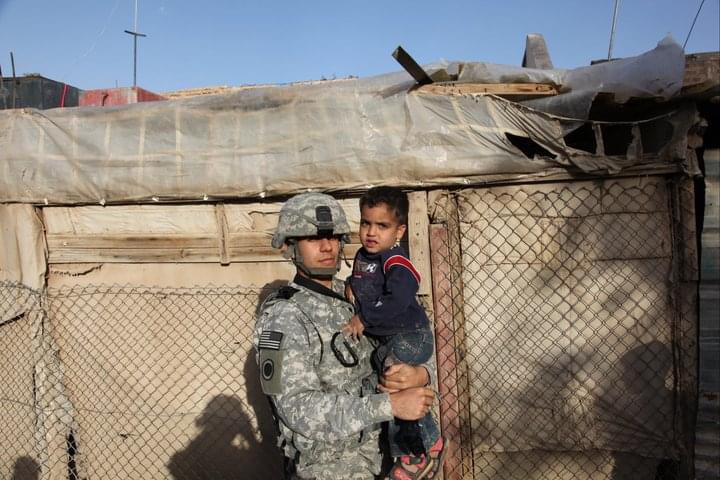
You’ve mentioned participating in hundreds of missions. When you say “mission,” what does that involve? I’m fascinated because I worked as a photographer for eight years in high school and college, but my missions were basketball games and soccer. Your work sounds considerably more intense!
Advin Illa: I was very young, but we were extensively trained and psychologically prepared before deploying. I spent a month in a battlefield simulator designed to prepare me mentally for the environment I was entering.
The missions varied enormously. Some involved intelligence operations and documenting the capture of individuals. Others required traveling to specific locations to scan identification documents.
We also documented humanitarian work, such as providing prosthetic limbs to local people, rebuilding infrastructure, and supporting community programs. I even volunteered with a Boy Scout-type program connected with the military.
One of my first missions remains especially vivid because everything was unfamiliar. I was stationed near one of Saddam Hussein’s former palaces in Baghdad. The military base was enormous, with its own airport and highways, but the area beyond it was extremely dangerous.
I remember riding out in a military vehicle and not fully understanding what to expect. When I stepped outside, I saw people everywhere carrying weapons. That was common in the environment, but I wasn’t prepared for it.
Standing beside me was Samantha Power, who served in the Obama administration. I was almost completely naive about the political significance of the people and events around me. I was simply focused on doing my job.
During that year, I sometimes completed three missions a day. I might travel around Baghdad, return to the base, sleep for four hours, and then leave on another assignment.
A special mission might require boarding a helicopter and flying north to Mosul. I would complete the assignment, sleep for another four hours, and then begin again. That was my life for an entire year.
Altogether, I participated in more than 500 humanitarian and military missions. I was trained for the work, but I was also young and somewhat naive. My son was the light that kept me moving forward.
Those experiences shaped me and gave me a humility I didn’t have before. They also became part of a continuing series of awakenings in my life.
How long did you serve in the military, and how much of that time did you spend working in combat camera?
Advin Illa: I served for approximately six years. I spent the first year as a mechanic and the remaining five years working in combat camera.
What did you learn in the military that has continued to serve you in a positive way?
Advin Illa: Discipline has taken me to places I never imagined reaching. In the military, you learn to wake up at five in the morning and follow through on your responsibilities.
I don’t apply everything from military life to how I live today, but I’ve kept the positive habits. That discipline has remained with me throughout every stage of my career.
Many veterans carry similar qualities into civilian life. They develop leadership skills in the service and later apply them as entrepreneurs, executives, and community leaders. That discipline and leadership are among the greatest things I received from the Army.
What aspects of military life remained challenging or didn’t serve you as well after you returned home?
Advin Illa: Mental health was one of the biggest challenges at first. Many veterans are still afraid to speak openly about it because a stigma remains.
PTSD can take different forms. I experienced it after returning home, but I did the work necessary to address it. It didn’t stop me from living my life, though I could see how it affected me.
In Iraq, many people isolated themselves whenever they weren’t on missions. Staying alone could become a form of protection. When I returned home, that habit followed me into civilian life.
I spent most of my time inside and deliberately chose a job that allowed me to work from home. I wasn’t going out or connecting with people very often, and eventually I had to break that pattern.
Military service also requires you to adapt to a very particular culture and community. I sometimes describe that as a form of indoctrination, though I don’t necessarily mean the word negatively. The military has to teach everyone to operate as one unit.
That conditioning can be useful while you’re serving, but some aspects require conscious adjustment when you return to civilian life.
I understand that plant medicine later became part of your healing and transformation. Did you discover it immediately after leaving the military, or did it enter your life later?
Advin Illa: It came later. I felt that I had become overmedicated and wanted to explore whether I could move away from medication because it wasn’t serving me personally.
I’m not against medication. Every human being is different, and people should receive whatever support they genuinely need. This was simply the decision I was considering for myself.
I thought about plant medicine for five years and did a great deal of research. I was afraid and made many excuses. I had already found someone who could guide the experience, but my ego kept resisting it.
After five years, I reached a point where I knew something needed to change. I wanted to feel reborn, think differently, and understand God.
At that time, I considered myself more agnostic. I believed in the universe but had never experienced what I understood as a direct spiritual connection.
Were you raised Catholic in Puerto Rico?
Advin Illa: Yes. I attended church as a child, received First Communion and Confirmation, and later had my son baptized.
But I had never experienced anything like entering another dimension or recognizing how impossible it is for the human mind to fully comprehend God. Through the experience, I felt that the divine was present regardless of what shape or name people gave it.
I felt reborn. I don’t describe myself as a born-again Christian, but I became a believer, and I remain profoundly grateful for that experience.
I participated in six ayahuasca ceremonies.
Was your first ayahuasca experience in the United States?
Advin Illa: Yes. It took place in upstate New York, in an Indigenous ceremonial setting that presented itself as having permission to conduct the practice. I don’t promote or recommend that other people follow the same path.
Each of the six experiences was different.
What was the first ceremony like for you?
Advin Illa: It was frightening. I knew very little about the spiritual world and didn’t believe other dimensions genuinely existed. I didn’t even enter the ceremony expecting to receive answers, but I did.
The experience was extremely difficult, and part of me wanted to leave on the second day. My ego kept telling me, “You need to get out of here.” I was afraid of encountering my own darkness.
For me, ayahuasca revealed habits, pain, and parts of myself I hadn’t wanted to see. It didn’t simply return me to painful memories. It showed me what those experiences had taught me and helped me understand why people sometimes behave as they do.
I also felt a profound connection with nature. I began understanding why people gather around fire, look to the moon, pray outside, and ground themselves through contact with the Earth.
I learned many lessons and remain grateful for the experience. But I’m not encouraging anyone else to use ayahuasca. If someone feels drawn toward a particular healing path, I believe they should research it carefully and make responsible decisions based on their individual circumstances.
What made you return for additional ceremonies?
Advin Illa: Integrating the experience into ordinary life was difficult. I felt awakened, or perhaps partially awakened, although I don’t know exactly what that word means.
I struggled to connect with people who had never experienced anything similar. It was also almost impossible to explain what had happened to me.
I knew I still had personal work to do. I carried resentment connected with childhood experiences, my mother, my father, and other relationships. I viewed ayahuasca as a plant medicine with healing potential, and I felt called to continue working with it.
I was afraid before every ceremony. Each time, I wondered whether I should proceed and feared that I might die. But I also felt that there was unfinished work within me.
After six ceremonies, I no longer felt called to return. That was five or six years ago, and I haven’t participated in another ceremony since. For me, those six experiences were enough.
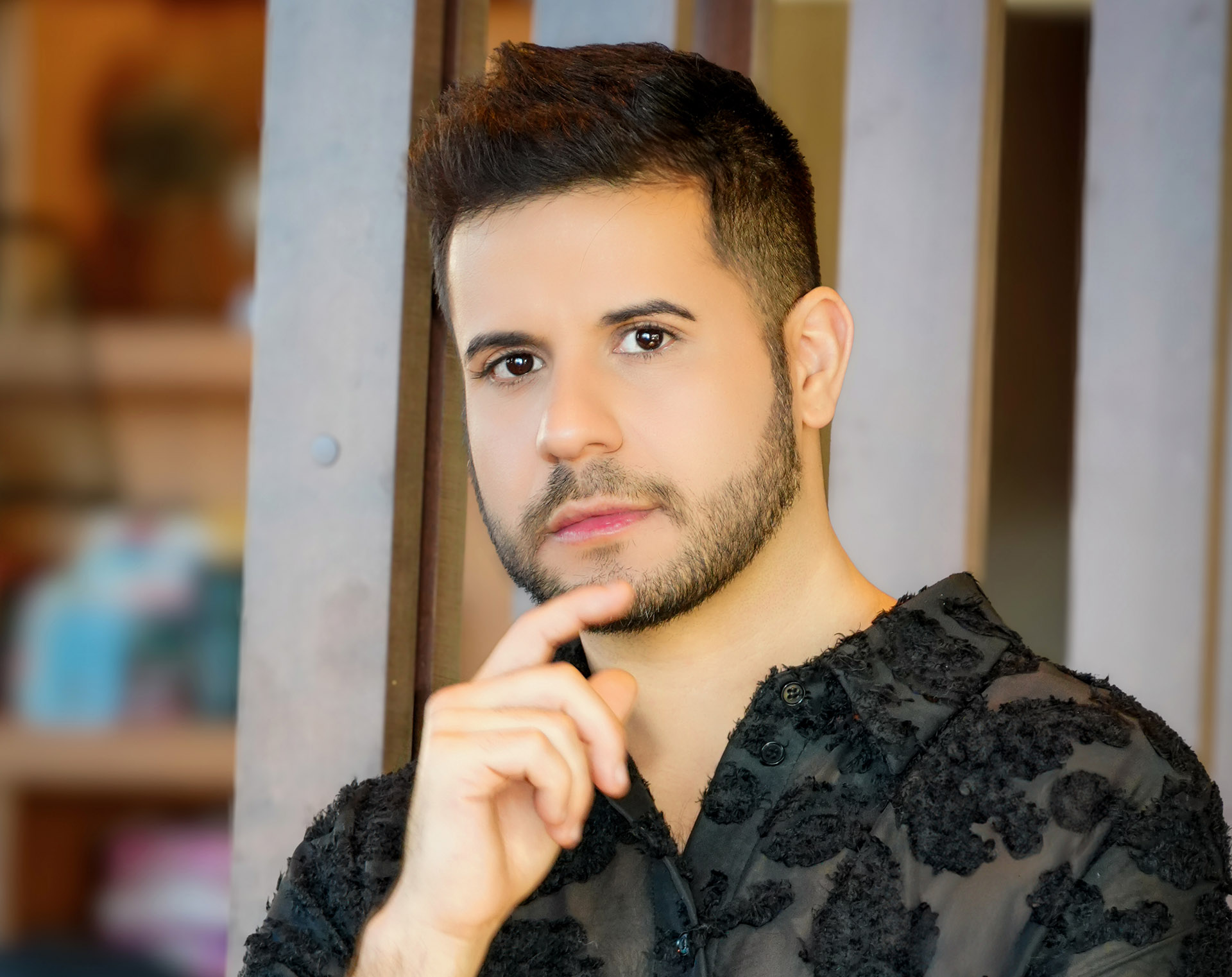
Photographer: Matias Almeida
How did you develop the vision for Iconic Original Media? What is the company, and how did it begin?
Advin Illa: Before starting the company, I was working as a junior interior designer. The company downsized, and I lost my job.
I was living in New York City and suddenly realized how quickly I could lose my income, run out of money, and potentially become homeless. It was frightening.
At the same time, I recognized that we were entering the creator economy. Artificial intelligence was becoming increasingly accessible, and I understood that I could use it carefully as a tool.
I gathered everything I had learned through photography, advertising, graphic design, website development, and other forms of media. Then I created my first magazine with my own hands.
I built the website, handled the marketing myself, and spent approximately $500 promoting it. A Dominican designer agreed to be featured on the cover, so I took the risk and flew to the Dominican Republic.
She covered the photographer, food, hair, and makeup, while I paid for my accommodations. We created the cover, released it, and it resonated with people. I couldn’t believe the response.
During that period, I prayed and asked God to show me what to do. I had previously begun developing a technology company and completed a minimum viable product, but I discovered that maintaining the platform would be prohibitively expensive.
Eventually, I realized, “I need to do something with photography. I need to return to my roots because this is what I truly enjoy.”
Iconic Original Media began as a magazine and has since evolved into a broader media company. I’m also an actor and producer, so my long-term vision includes producing films, short-form projects, and other original media.
I want it to become a home for iconic, original content that people genuinely enjoy. I’m not interested in producing empty reality television simply for attention. I want to create educational work and carefully curated films designed for a particular audience.
We are selective about what we publish and produce. The company also introduces audiences to emerging artists, entrepreneurs, creators, and other talented people who may not receive exposure from larger media organizations.
Access to established media can be extremely expensive. I want Iconic Original Media to serve as an entry point where emerging talent can present their work, strengthen their authority within their industries, and eventually reach larger platforms.
I understand who our community is. We serve emerging artists, entrepreneurs, creators, and visionaries who are ready to share their gifts with the world.
How would you describe Iconic Style Magazine? If someone visits the website, what will they discover?
Advin Illa: The magazine is called Iconic Style Magazine. We curate emerging talent and give exposure to people who may not otherwise have that opportunity. There is a great deal of fashion, but we also feature celebrities and public figures.
We do more than simply produce a magazine. We create a complete, 360-degree marketing campaign tailored to the person featured on the cover. For example, when we worked with Amara La Negra, we wanted to help shift the way people perceived her. Many knew her as a reality television personality, but she is also a serious businesswoman. Through the fashion strategy and imagery, we presented her as a boss and CEO while still honoring her vibrant personality.
I designed the magazine with New York in mind. People often describe New York as a concrete jungle, but as an interior designer, I know that beneath all that concrete is a foundation of steel. That inspired the magazine’s metallic design.
I also apply interior design techniques to the pages. When people walk into a beautiful boutique or thoughtfully designed space, they naturally want to stop, look around, and experience it. I wanted the magazine to create that same feeling. The pages are designed as spaces that invite readers to pause and take everything in.
What distinguishes Iconic Style Magazine is its design, its focus on emerging talent, and the way it reflects New York and global culture. We also celebrate minorities, the LGBTQ+ community, and the drag scene. I see all of that as art. It is not about judgment. It is about seeing and appreciating the beauty in different forms of expression.
I know you are also passionate about helping veterans transition from military service into civilian life. How does that passion connect with the magazine and your filmmaking?
Advin Illa: I’m also an actor. I’m not famous, and I say that humbly, but I’m proud to call myself an actor because acting is real work. It is a business, and it requires preparation. You have to learn your lines, understand where the cameras are, hit your marks, and remember that an entire production is investing time and money in the work.
One of my missions is to represent veterans well and challenge the stigma surrounding them. There is often an assumption that every veteran has serious issues and needs help. Some veterans do need support, of course, but that should not define the entire community. Through art, education, and storytelling, we can build a broader understanding of who veterans are and what they can contribute.
Acting, film, and social media can cross borders and reach people in many different countries. Through that work, I want to send a message of hope to society and to veterans themselves. Your mission does not end when you leave the military. You can continue serving, but perhaps in a different way.
I want to make films with purpose and direct a portion of the proceeds toward nonprofit organizations that support veterans. One of my projects is Beyond the Fight, which grew out of a short film called The Fight. It is a spiritual science-fiction story centered on the awakening of a soldier named Marcus.
The story takes place in a near-future veterans’ healthcare system where artificial intelligence and robotics are used to suppress trauma as an inexpensive alternative to deeper care. Marcus is an android, but after someone introduces him to plant medicine, he begins remembering his humanity. He breaks free from his robotic patterns and starts to heal.
The concept was partly inspired by Steven Spielberg’s A.I. Artificial Intelligence and several independent films. The story includes eight veteran android characters, each with a distinct personality and abilities subtly inspired by different plant medicines. I wanted to explore these ideas through science fiction rather than presenting them in an obvious way.
I asked myself, “How can I help veterans on a larger scale?” A film can reach a universal audience, remain accessible for years, and generate ongoing conversation. It can also raise awareness of the organizations doing meaningful work in the veteran community.
We are also developing toys connected to the characters. Military children often experience long periods of separation when a parent is deployed or otherwise absent. I want those children to have characters that help them feel less alone and remind them that they are part of a larger community.
My hope is that some of the funds generated by the project can support hospitals, clinics, nonprofit organizations, addiction recovery programs, and other resources serving veterans. Even if the impact is not enormous, creating hope for one person still matters. The world needs more consciousness, and I believe we are moving toward a greater global awakening.

Photographer: Matias Almeida
Where can people learn more about the magazine, your films, and the work you are doing with veterans?
Advin Illa: I’m also collaborating on a planned veteran retreat connected with Beyond the Fight. The vision is to offer a free experience for veterans, with locations such as Sedona or upstate New York under consideration. I would teach directing, acting, and screenwriting to a group of approximately twelve veterans experiencing PTSD.
During the retreat, they would work together to create a short film or another artistic project. They would leave with something tangible they had made themselves. More importantly, I hope they would leave with greater confidence, self-expression, and belief in what they can accomplish.
People can learn more about the magazine and our creative work at Iconic Original Media. They can also visit advinilla.co to learn more about me and follow the links to my social media channels. Information about Beyond the Fight is also available through The Veterans Channel.
Thank you for inviting me to share my story. I hope it resonates with people and encourages us to move toward a more conscious, connected, and aligned world.
Thank you, Advin. Your story is deeply inspiring. When we hear one another’s stories, our minds expand, our empathy grows, and we begin to recognize ourselves in people whose lives may look very different from our own.
Advin Illa: Thank you so much for having me. I truly appreciate it.